Tips
Sandboarding on a Huacachina UTV tour: first-timer guide
First time sandboarding in Huacachina: lying down or standing, how to brake and fall, picking a dune, board wax and what to wear on your UTV tour.
Published on 7 October 2026 · 8 min read
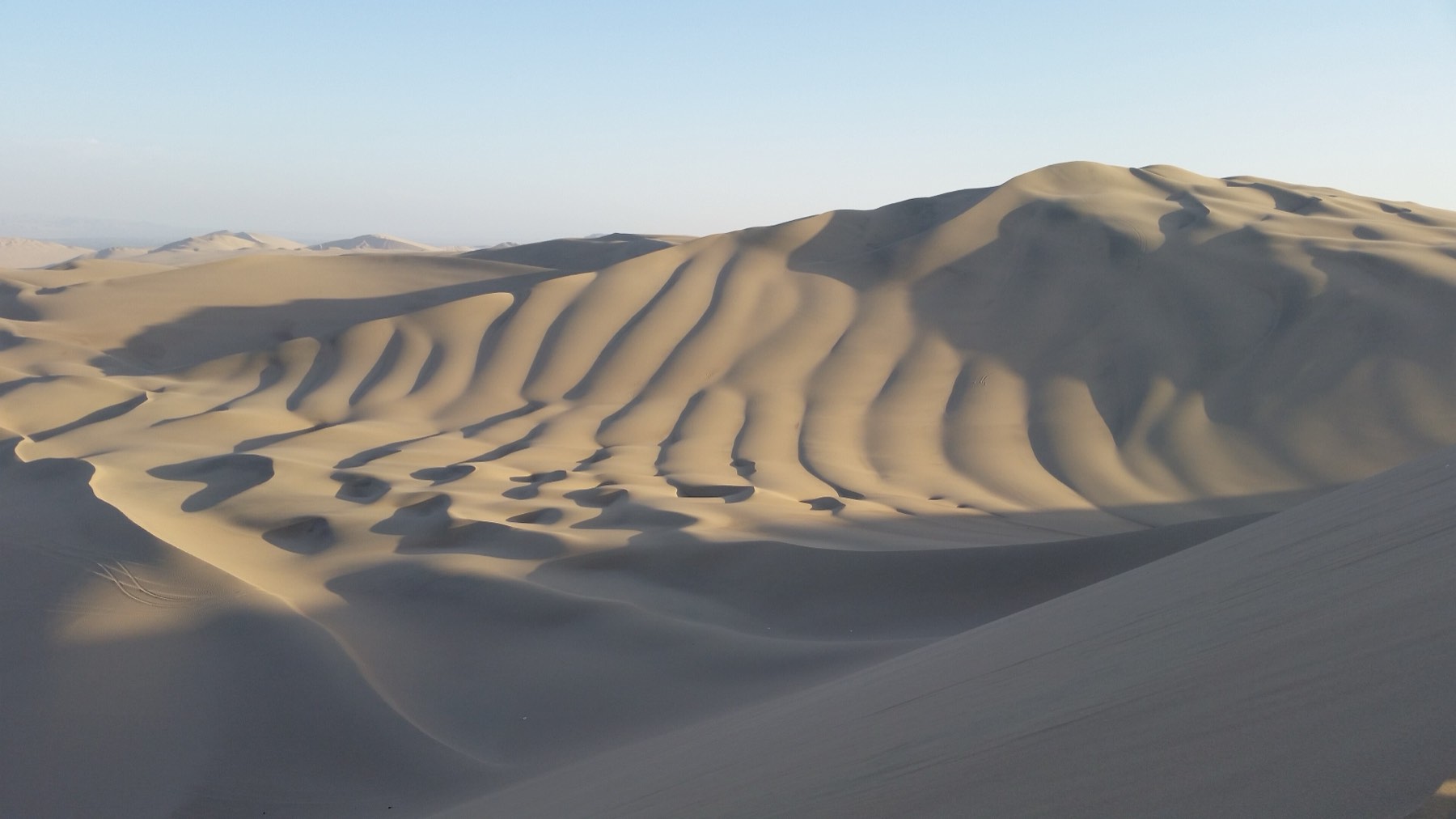
If you're trying sandboarding for the first time on a UTV tour in Huacachina, start lying face down and let the guide pick the dune: short, smooth, with a long flat run-out at the bottom where the board slows down on its own. To brake, dig your toes into the sand. And if you fall, go sideways or onto your backside, never onto your hands. Sandboarding isn't included by default: you request it when booking and we build it into your UTV outing.
The rest is the difference between a fun run and a strapped-up wrist.
Lying down or standing? Your first sandboarding run on a Huacachina UTV tour
Lying down. Always, the first time.
We say this even if you tell us you snowboard or surf back home. Sand doesn't behave like snow: it grabs suddenly where it's loose, speeds up where the wind has packed it, and changes from one afternoon to the next. Riding face down lets you feel all of that with your body close to the ground. In Ica, where sandboarding has been around since the late 1980s, it's how almost everyone starts, and sliding down a dune lying or sitting down is common practice, according to Wikipedia.
How to ride lying down
Lie on your stomach on the board, chest toward the front, and hold the front edges at the sides, with your fingers kept clear of the underside. Elbows tucked in, head up and looking down the dune, legs stretched out behind you with your toes ready to touch the sand. Someone at the top gives you a little push, or you just let yourself go.
That's it. There isn't much more to learn, which is exactly why it works.
The first run is almost always slower than you expected. The second is a lot faster, because you've stopped braking out of nerves. Before asking for a longer dune, listen to the guide.
Standing up, once you know the dune
If after a few runs lying down you're itching to try standing, do it on the same dune, now that you know how it runs. Knees bent, eyes on where you're going rather than on your feet. The guide will walk you through the rest of the stance right there, with the board in front of you, which is where it actually makes sense.
The classic beginner mistake is leaning forward out of fear. The nose digs in and you get launched.
Don't get frustrated if standing doesn't click. Some people stay lying down all afternoon and have more fun than anyone. Others are up on their second try, get cocky and fall five times in a row. Both are normal.
How to brake and how to fall without getting hurt
Lying down, braking is simple: lower your toes to the sand and dig them in gradually. What you don't do is put your hands down. A hand that hits sand at speed bends backward, and the wrist pays first.
Standing up, if you can't control your speed, the sensible move is to sit down. Drop onto your backside, backward or to the side, arms pulled in against your chest. It feels like giving up. It's actually the best braking move a beginner has, and the sand absorbs it far better than an outstretched hand.
That's the golden rule: don't stick a hand out to break the fall. It's a reflex, and it's exactly what you need to unlearn. Why it matters so much, and what the snowboarding data says about wrists, is in group sandboarding without injuries, along with the rules for when several people are riding.
If the board twists or gets away from you while you're lying down, let go and let your body slide. But shout a warning: a board with nobody on it keeps going, and someone might be at the bottom picking up theirs.
One thing hardly anyone thinks about: riding with your phone in your hand to film yourself. It takes a hand off the board, and when something goes wrong, your reflex is to protect the phone instead of yourself. Let someone else film, from the top or from the side of the landing area. Your phone goes in your bag or a zip-lock pouch.
And never, when standing, deliberately go down head first or pitch forward. No "let's see what happens".
Which dune for your level (and why the guide chooses it)
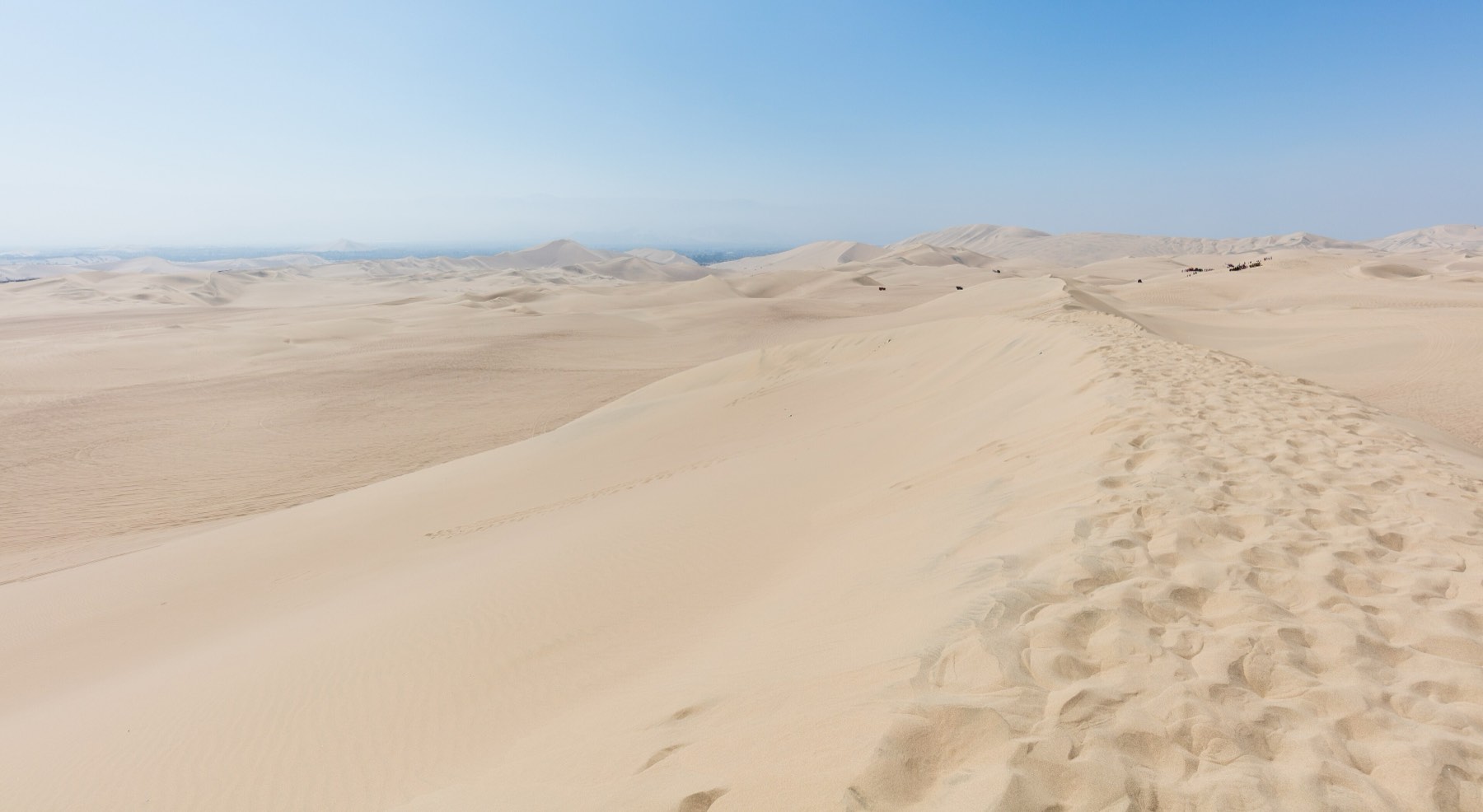
A good beginner dune isn't the tallest one. It's the one with a moderate slope, a smooth surface and a long flat stretch at the bottom, where the board loses speed by itself even if you can't brake yet. If the bottom of the run leads into another climb, a hollow or the vehicle track, it's no good, however nice it looks from the top.
Before letting you go, the guide looks at how the sand is that day and what's at the bottom. If it's very loose, the board digs in and is hard to get moving. If the wind has packed it, it runs faster than it looks. That changes from one afternoon to the next, so Tuesday's perfect dune might not be Thursday's.
Once you can control your braking, the guide may suggest a longer slope. Master the landing first, then go higher.
Here's a question worth asking anyone who offers you sandboarding in Huacachina: who picks the dune, and who watches the landing zone? If the answer is "you choose", find another plan.
Wax, clothing and what to bring for sandboarding in Huacachina
The wax
Boards are usually waxed, typically with a paraffin-based wax, so they glide: it's rubbed on the base before a run, as Wikipedia describes. Without wax, the board sticks and you grind to a halt halfway down, which is annoying but not dangerous. With wax it runs noticeably faster. So if a board has just been waxed, take the first run more gently.
Clothing
- Light long trousers. Lying down, your knees and thighs rub against the sand. In shorts you'll feel it the next day.
- A thin long-sleeved top, or a T-shirt you don't care about. Sand gets in at the collar and everywhere else.
- Closed shoes, laced tight. For walking up the dune and for driving the UTV. Flip-flops get lost on the first climb.
- Sunglasses that fit snugly, or ski goggles if you have them. A neck gaiter for your mouth if there's a breeze.
- Empty pockets. Keys and phone go in your bag. Whatever's in your back pocket ends up buried in the dune.
Bring water, sunscreen and a cap for waiting your turn at the top, which is where the sun hits hardest. For the rest of your daypack, see what to pack for the Ica desert.
The UTV tour is the base: you drive, with the guide in front and radios between vehicles. Sandboarding happens at a stop, on the dune the guide chooses, in good light so the rider can see the landing and whoever's at the bottom can see the rider coming. If you also want to stay for sunset, we arrange it in that order; see UTV, sandboarding and sunset: the full group plan.
Coming down from Lima or arriving from abroad, the request is the same: tell us in advance, because boards and dune choice need planning. The full pre-departure protocol, from the vehicle to the helmets, is on our safety page.
Message us on WhatsApp at +51 967 564 701 with your date, how many of you there are, who wants to sandboard, whether anyone has tried it before, and whether anyone has wrist, knee or back trouble. We'll put the outing together from there.
Frequently asked questions
Is sandboarding hard the first time? Lying down, no: there's almost nothing to learn and it's fun from the first run. Standing is harder, and falling a lot at the start is normal.
Is sandboarding in Huacachina dangerous? The typical problems come from falling onto your hands, standing up too soon, or a badly chosen dune. Starting face down, on a dune with a flat run-out, one rider at a time, cuts the risk a lot.
Can I sandboard if I've never snowboarded? Yes. No previous experience is needed: you start lying down, and people who do snowboard start exactly the same way.