Safety
UTV or sand buggy: what actually changes for your safety in Huacachina
The classic buggies are part of the history of Huacachina. UTVs are something else: factory-built vehicles with safety engineered in from the start. Here is the difference, point by point.
Published on 5 August 2026 · 4 min read
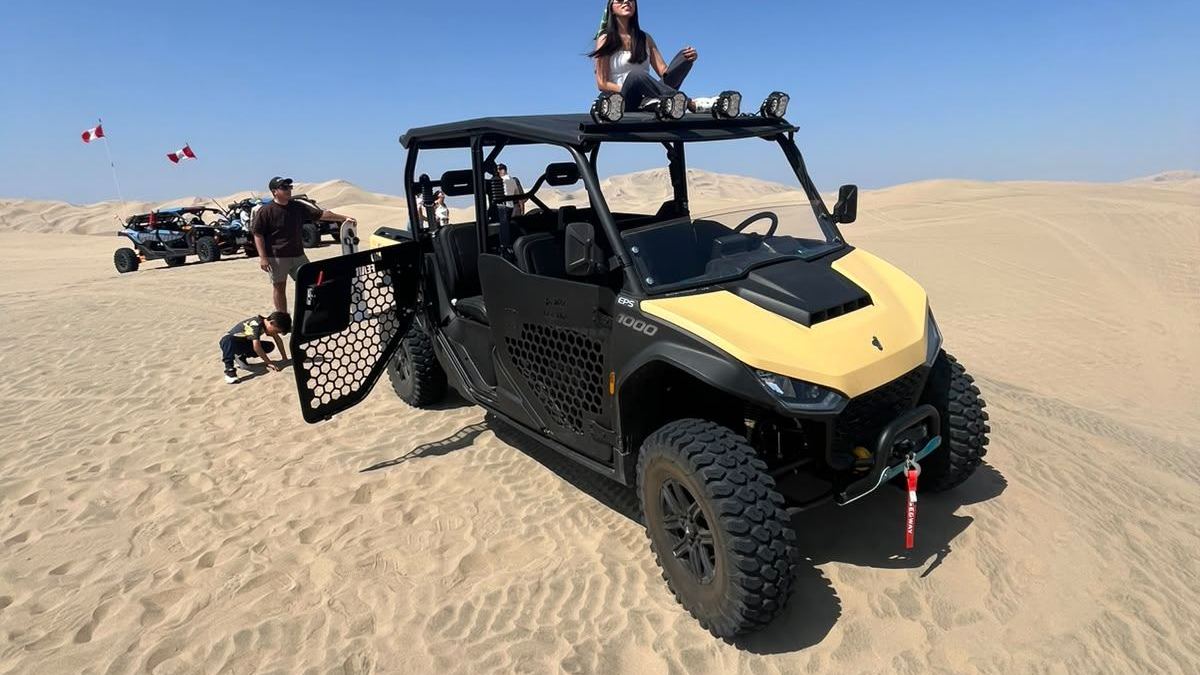
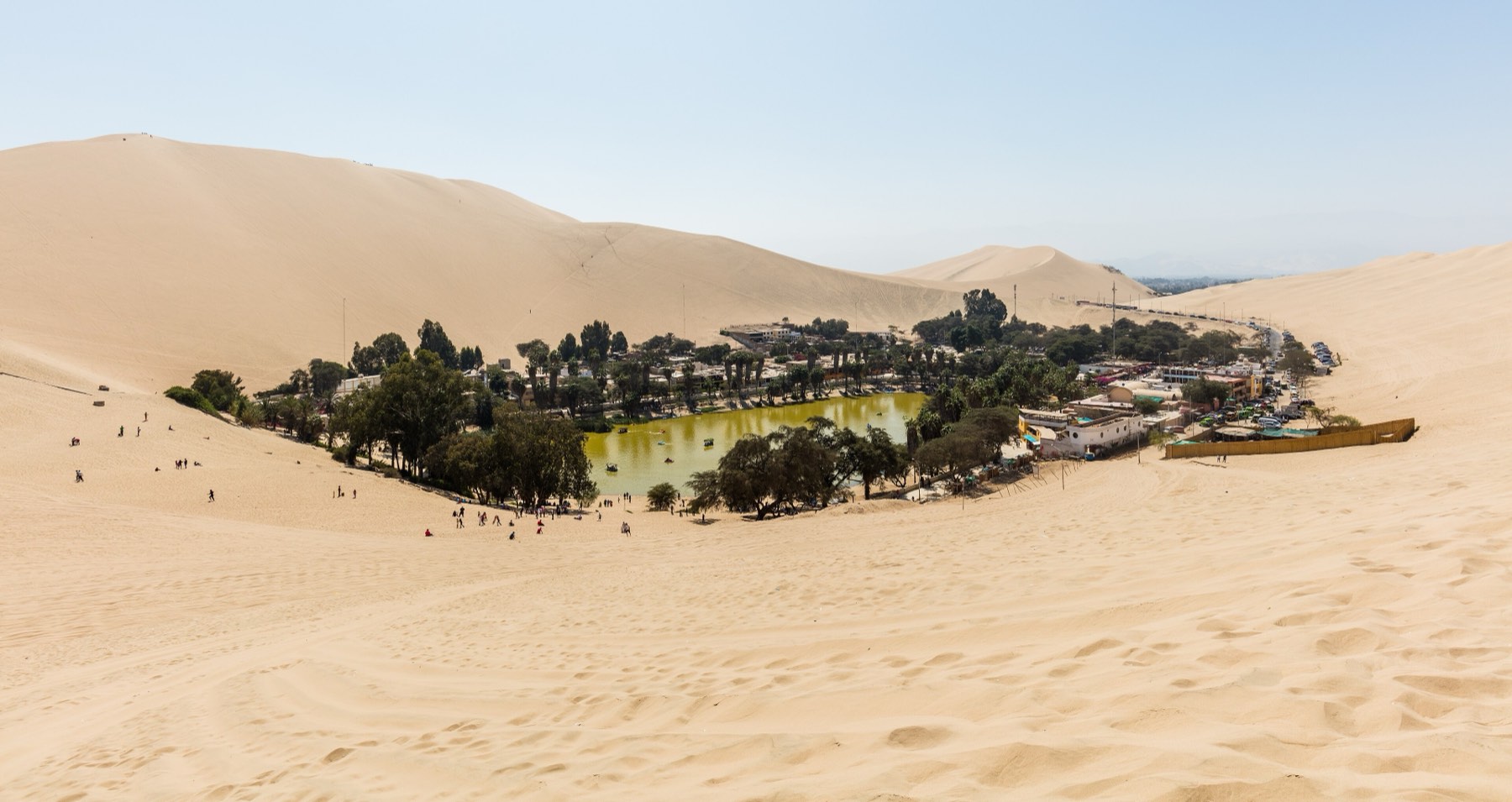
Search for "Huacachina dunes" and you always get the same picture: a brightly painted sand buggy, twelve people on bench seats, an enormous dune behind them. That photo has thirty years of history and it is part of the identity of the oasis.
We work with something different: modern factory-built UTVs. That is not marketing, it is a real difference in how the vehicle is made. Here it is without decoration, so you can decide with actual information.
What a UTV is
UTV stands for Utility Task Vehicle, and in the off-road world they are also called side-by-sides. They are mass-produced by motorcycle and machinery manufacturers, type-approved, and designed from the ground up for hard terrain: sand, rock, mud.
The brand is not the point. The point is that the safety comes from the factory and tested, not added afterwards by a workshop.
The five places where the difference shows
1. The rollover structure
A UTV comes with a ROPS cage designed and tested by the manufacturer. It is calculated to take the weight of the vehicle if it goes over on a dune.
A hand-built buggy is welded in a workshop. Many are made very well by people who have been doing this for decades. But no two are the same, there is no spec sheet and there is no rollover test.
2. How the vehicle holds you
This, for us, is the biggest one.
- UTV: a 4-point harness. It holds both shoulders and your hips. On a steep descent your body does not move off the seat.
- Buggy: a 2-point lap belt, and on some vehicles none at all.
On a dune the movement is not only forwards: it is sideways and vertical. A lap belt leaves your upper body loose exactly when it matters most.
3. The seat
A UTV has bucket seats with side bolsters that hold your body, plus nets or doors that stop an arm leaving the vehicle. The classic buggy uses bench seating: you hold on with your hands.
4. The suspension
UTVs have long-travel, adjustable suspension. Translated: the sand hits the machine, not your back. It is a difference you feel the next day, especially with kids or older travellers on board.
5. Who drives
In a buggy you are a passenger, always. In a UTV you drive, after a briefing and a practice run on flat ground, with the guide ahead marking the route and radios between vehicles.
That changes the experience completely. And, contrary to how it sounds, it does not make it less safe: you go at the speed you choose, on a marked route, with no sections you have not seen before.
What we do before starting the engine
This is not a list written for a website. It is what happens every morning out on the sand:
- Vehicle check: brakes, tyre pressure, harnesses, fuel, radio.
- Safety briefing and a walk-through of the controls.
- A practice run on flat ground until you are comfortable with throttle and brake.
- Helmet and harness fitted person by person.
- Marked route, guide in front, first-aid kit and GPS in the lead vehicle.
- If the wind picks up sand or visibility drops, the departure is rescheduled.
That last point is the one we argue about most with people who already bought the bus ticket. We keep it anyway.
So is the classic buggy dangerous?
That is not what we are saying, and it would be unfair. There are very well maintained buggies and drivers with twenty years of dunes behind them who know the terrain better than anyone.
What we are saying is simpler: if safety equipment matters to you, a UTV starts from a higher standard, because that standard comes from the factory instead of depending on the workshop that built it.
Choose with that in mind. And if you go with another operator, ask them the same three questions: what restraint the vehicle has, whether there are helmets for everyone, and what happens if the wind turns bad.
Questions we get a lot
Do I need a driving licence? For the guided experience no professional licence is required, but the driver does need to meet our minimum age and be in condition to drive. Message us and we will confirm your case.
What if I have never driven anything like it? That is the most common situation. The flat-ground practice run exists exactly for that.
Can I ride as a passenger instead of driving? Yes. Many groups take turns at the wheel during the trip.