Groups
Large groups on the dunes: how a UTV convoy works
How a UTV convoy works for large groups in Huacachina: order, spacing, radios, the passenger's job, getting stuck, and why wind decides the day.
Published on 7 October 2026 · 8 min read
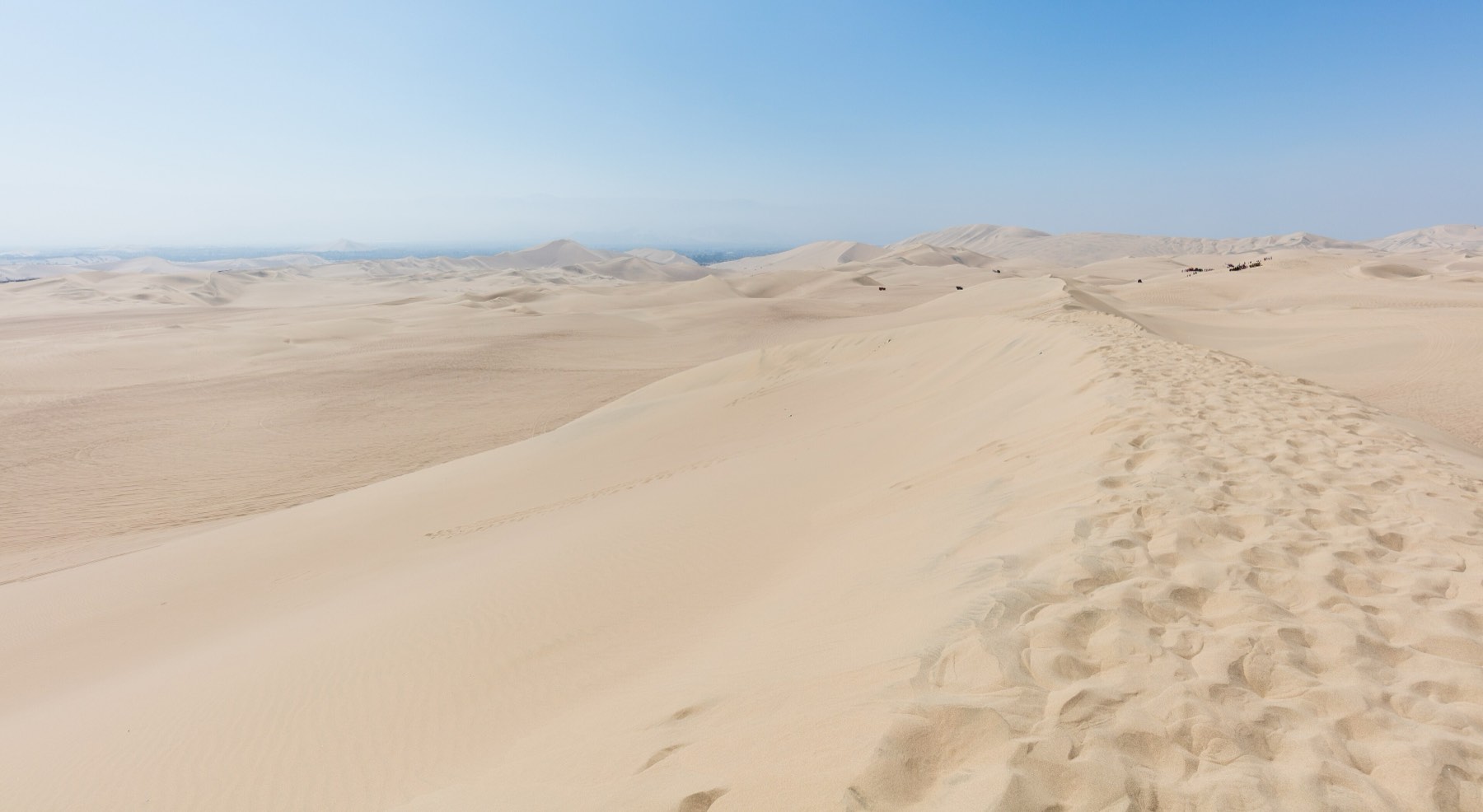
A UTV convoy with a large group is a single file: the guide goes first and picks the route, the vehicles follow one behind the other with room to brake calmly, everyone's linked by radio and nobody overtakes. If a UTV gets stuck or someone feels sick, you say so on the radio and the guide's instructions are what count. If the wind is lifting sand, nobody goes out. That simple. And that strict.
With a big group, every one of those rules weighs more. A lapse from one driver when there are only two vehicles out is a scare. In a long line it becomes everybody's problem.
Here's what actually happens on the dunes when lots of UTVs move at once. Booking, splitting the group and taking turns at the wheel are covered in how a group UTV tour in Huacachina works.
How a UTV convoy is ordered on the Ica dunes
The lead vehicle always goes first. It carries the first-aid kit, water and GPS, and the guide knows every crest and drop on the route. They decide where you climb and where you don't.
The order behind them is the guide's call too. Drivers don't pick their spot, and it isn't first come, first served from the car park.
What is up to you is being honest about how you feel. If the flat-ground practice left you less than confident, tell the guide before you set off, even if it's awkward in front of your friends. That's exactly the information they need to arrange the line. The person who keeps quiet and then freezes on the first climb makes the afternoon harder for everyone.
And if your group is really big? Send us your real headcount and we'll tell you how we'd set it up. We don't quote numbers of UTVs per group without seeing the case.
Spacing, pace and radios: what keeps the line together
Spacing
On sand a vehicle needs more room to stop than on tarmac. And every UTV kicks up sand from its wheels, a cloud that blinds whoever's behind.
A good rule of thumb: if you're eating the sand of the car in front, you're too close. You should see the whole vehicle ahead and have room to stop without touching it, downhill included.
The opposite mistake is just as bad. The driver who hangs way back out of nerves loses the guide's line and starts making up a route of their own. That's exactly what you don't want on the dunes. The guide picks where to climb because they know where the sand is soft and where there's a drop on the far side of a crest. From the back of the line, you can't see that drop.
Pace
The convoy moves at the speed of its most cautious driver. Always. If the line stretches out, the answer is to go slower, not to ask the back to hurry up. Anyone itching to go fast has to accept that today isn't the day.
Radios
Every vehicle carries a radio, checked before departure along with brakes, tyres, harnesses and fuel. It's what ties the line together: the guide gives warnings, the drivers say what's going on.
One thing we ask of big groups: the radio is for things that matter. If six people are singing on the channel at once, nobody hears "stop". Save the jokes for the photo stops.
The passenger
When it's just a couple out on the sand, the passenger is along for the ride. In a long convoy they've got real work to do, and it's some of the most useful work there is.
The driver is watching the guide's line and the vehicle ahead. They can't watch everything. The passenger can: they can say when the driver is creeping too close, check that the vehicle behind is still in the mirror, and keep an ear on the radio so the driver isn't doing two things at once. If the UTV behind vanishes, the passenger is the first to notice.
They're also the first to notice when the driver is tensing up. A quiet "ease off a bit" at the right moment beats any rule.
That's why passengers sit through the same briefing as drivers, wear the same helmet and 4-point harness, and shouldn't be filming with their phone stuck out past the side net. That's what the stops are for.
What happens if a UTV falls behind or gets stuck
It happens. Not often, but in a long convoy it's the question we get asked most.
A UTV can bog down in soft sand on a climb, or lose momentum halfway up because the driver lifted off the throttle in a moment of panic. If it's you, say so on the radio and always follow the guide's instructions over the radio. The guide decides what happens next. The rest of the line waits for whatever the guide tells them.
What doesn't help is improvising. Sand is deceptive: a slope that looks gentle from your seat can be soft and steep once you're on it. Everyone trying to sort it out on their own is how a small hold-up turns into a big one.
Same if someone feels sick or scared: say it on the radio, don't wait for the next stop out of embarrassment, and the guide will decide how to carry on. The bigger the group, the more likely someone isn't feeling great. That's normal and it doesn't ruin anything.
Why wind decides the day, especially for large groups
This is the call that gets argued about most with big groups. Moving lots of people takes effort, and rescheduling hurts.
The coast of the Ica region gets strong winds that carry sand, known locally as Paracas winds. In June 2023, in Pisco (on the regional coast, not at the oasis), Peru's state news agency Andina reported that SENAMHI, the national weather service, recorded visibility down to 500 metres. SENAMHI posts wind warnings for the central and southern coast, and they're worth checking before you travel.
But the desert doesn't need an official alert to turn nasty. With wind, the sand thrown up by the convoy itself adds to what's already in the air. The fourth driver can't see the third. Crests change shape. In those conditions a long line of vehicles is the last thing that makes sense.
So the rule is the same as for two people: if the wind or visibility aren't right, we reschedule. No debate. If you're moving a big group around Peru, don't book the bus out of Ica straight after the dunes.
What to ask any operator before taking a big group out
If you're comparing, ask everyone the same questions and notice who answers clearly:
- Who drives in front, and who decides the route?
- Is there a radio in every vehicle, or only the guide's?
- Are the vehicles checked before going out? What gets checked?
- What happens if the wind picks up on the day?
- If someone feels sick in the middle of the line, what happens?
- What restraint does each seat have, and are there helmets for everyone?
Wondering whether a Huacachina dune buggy tour is safe for a big group? Those answers tell you most of it. The US CDC's advice for Peru puts the wider risk bluntly: motor vehicle crashes are the number one killer of healthy US citizens abroad. Plenty of classic buggies are well run by drivers who know the sand by heart. The difference is that our UTVs come from the factory with a ROPS roll cage, 4-point harnesses and bucket seats, and someone from your own group drives each one with the guide in front. Our answers are on the safety page.
One thing that helps a lot before you arrive: share the radio and spacing rules in your group chat. That way nobody hears them for the first time with the engine running.
To organise your group, message us on +51 967 564 701 with your date, real headcount, how many want to drive, the ages of any kids or older travellers, and where you're staying. Vehicle details are on the UTV tour page. For a company outing, see team building on the Ica dunes.
Frequently asked questions
How many UTVs can go in one convoy? It depends on the group and the day, and we'd rather not give you a number that later changes. Tell us your headcount and we'll explain how we'd organise it.
Can I go faster if I'm a good driver? Not inside the convoy. The line moves at the pace of the most cautious driver, and nobody overtakes the guide.
What happens if my UTV gets stuck on a dune? You report it on the radio and follow the guide's instructions. The guide decides how it gets sorted, and the rest of the line waits to hear from them.