Groups
Team building on the Ica dunes: UTV days for companies
Team building on the Ica dunes for companies and HR: why driving UTVs as a team works, what to get in writing from the operator, and adding sandboarding.
Published on 7 October 2026 · 8 min read
Team building on the Ica dunes works because it makes a team actually do what usually only gets talked about in a meeting room: let go of control, trust whoever's driving, and speak up at the right moment. If you work in HR or got handed the job of organising it, what matters most is getting the operator's safety protocol and each person's equipment in writing, and agreeing from day one what happens if it's windy on the date.
We've been taking groups into the Ica desert for more than 12 years, and companies are unlike any other group. Not everyone comes because they want to. They come because it's the team activity, and that changes how it needs organising.
This post is written mostly with teams based in Peru in mind, but it applies just as well to an international company running an offsite or incentive trip that takes in Huacachina.
Why UTVs work for team building on the Ica dunes
A scene we see again and again: the manager climbs into the passenger seat and hands the wheel to the intern. For the first stretch the manager sits bolt upright, offering directions nobody asked for. By the third dune they've gone quiet and are looking at the view. In our UTVs the group drives, not a hired driver, and you swap at the stops. That puts people somewhere other than their usual spot in the org chart, and letting go is a lot easier to put on a slide than to do on a sand descent.
Then there are the radios. Every vehicle is linked to the guide, and on the dunes people learn fast that long messages are useless. "Stop." "I'm stuck." "All good." We've watched department heads realise their people communicate better over a radio in the desert than over email at the office.
And the line. The convoy follows the guide at the pace of the most cautious driver, and nobody overtakes. There's always a boss who wants to be up front, right behind the guide, as if it were a race. It isn't, and the guide decides the order. For very competitive teams it's the hardest part of the day and the most useful one: the group moves when the last vehicle moves.
Our take, after a lot of company groups: don't turn the dunes into a contest between departments. What brings people together isn't winning. It's everyone being a beginner at the same time. Nobody knows how to drive on sand on day one, not even the CEO.
What an HR lead should get in writing
This is the part nobody does, and if anything goes wrong it's the first thing you'll be asked about. Ask any operator for it. Us included.
The safety protocol and each person's equipment
What happens before the engines start, in what order, and what protects each participant. Here's ours, so you have something to compare against:
- Each UTV is inspected first (brakes, tyres, harnesses, fuel, radio).
- A safety briefing for everyone, controls included.
- Practice on flat ground, unhurried, until every driver is comfortable.
- Helmet, harness and shoes checked one person at a time.
- On the dunes: a marked route, the guide in front carrying first aid, water and GPS, and a radio in every vehicle.
The vehicle is a factory-built UTV with a ROPS roll cage designed and tested by the manufacturer, 4-point harness, bucket seats and side nets. Helmets for everyone, drivers and passengers. If you're comparing with a classic Huacachina dune buggy, ask about restraint too: many use bench seats with a 2-point lap belt or none at all. Many are well maintained; what differs is whether the restraint was designed in at the factory or added later. It's all on our safety page.
The plan B for wind
The Ica coast gets strong winds that lift sand, and Peru's weather service SENAMHI posts wind warnings for the central and southern coast when they're expected. If wind or visibility aren't right, we reschedule. No debate.
For a company this is critical. Transport, accommodation and the agenda are usually locked in, and the pressure to "go anyway" lands on you, not on the managing director. So agree it at the start, with a backup date or slot. And never make the dunes the last thing before the bus back to Lima or the flight home: if the wind forces a change, there's nowhere to move it to.
Get what's included and what isn't in writing as well, so there are no surprises when the expense report comes round. Hotel pickup isn't included as standard (ask about it), nor are meals and drinks, nor personal travel insurance. If your company has any admin requirements, raise them when booking: we'd rather sort it out early than leave it half-answered in a voice note.
Logistics: participants, alcohol and shaping the day
Start with the list. Before the trip, ask each person what we'd ask you: whether they want to drive or ride along, whether they get motion sick, any back or neck injuries, and any medical condition we should know about. Do it privately, not in the team channel. Some people won't admit in front of colleagues that steep descents scare them.
And respect whoever doesn't want to drive. At every team event there's someone who's only there because they have to be, who arrives looking serious and grabs whatever's nearest on the first descent. They can ride along all afternoon, and nobody needs to know why. Making someone drive to "bring them out of their shell" is the worst idea we see at company outings.
Another classic: the team that left Lima on a pre-dawn bus, comes straight to the sand and hasn't eaten a thing. Lack of sleep, an empty stomach and the first dunes is a recipe for motion sickness. If the journey's a long one, build in a stop for something light first. We cover it in what to eat before a dune tour.
Alcohol comes afterwards. Company events tend to end with a toast or an open bar, and that's fine, but our advice is simple: whoever's driving has nothing before or during. The US CDC's travel advice for Peru is plain about it: do not drive after drinking alcohol, because people take more risks when intoxicated. Dunes before dinner. Never the other way round.
If the team is large, the line needs more order, and we explain how in how a UTV convoy works with large groups. We don't quote vehicle numbers without seeing the case.
What to add to the UTV
We build tailored days on request. With teams, what works best is sandboarding, which isn't included as standard: ask and we'll set it up. Be warned, it's where competitive teams get carried away. Before anyone sets out to prove who's fastest, read group sandboarding: how to get down without getting hurt.
Zorbing fits in the late afternoon, meeting at 4:30 pm, and it has one big advantage for companies: there's nothing to learn, so the colleague who didn't want to drive gets to join in too. Details on the zorbing page. And if you'd like to finish with a visit to pisco wineries, that's also on request, always after the UTV, once nobody's driving.
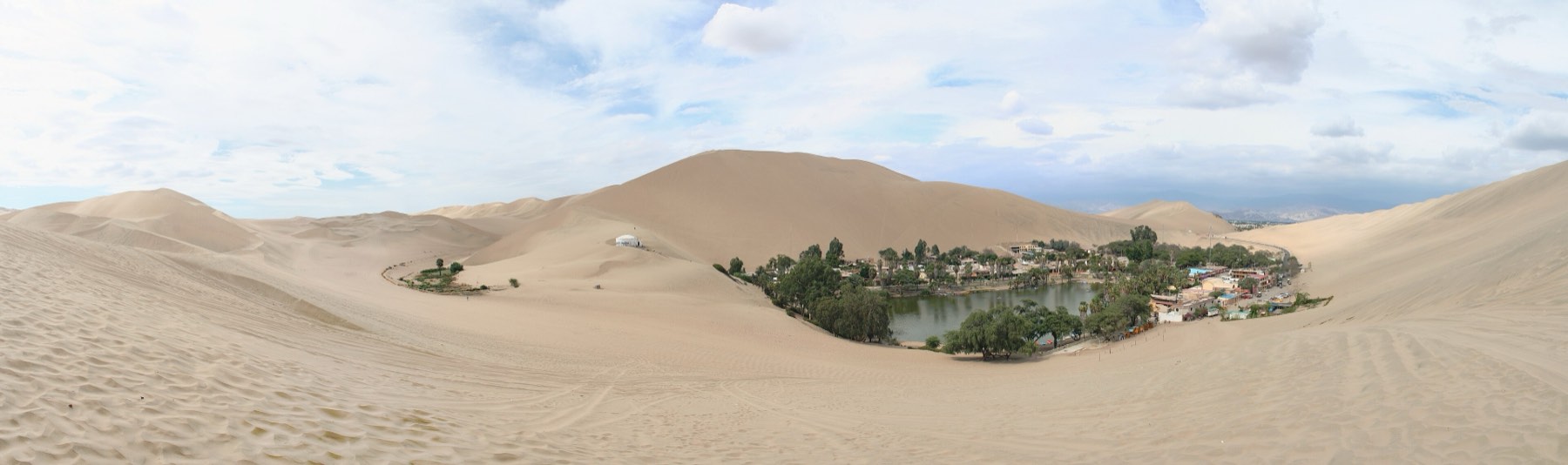
To get started, message us on +51 967 564 701 with your date (and an alternative), headcount, how many want to drive, anyone prone to motion sickness, if you need transport and what you'd like to add. Tell us where the team is staying too: Huacachina is about five kilometres from the city of Ica, and setting up the meeting point from town isn't the same as from the oasis. Vehicle details are on the UTV tour page.
Frequently asked questions
What information do you need about participants? Headcount, who wants to drive and who'd rather ride along, ages if anyone under age is coming, and whether anyone gets motion sick or has back or neck injuries. With that we can tell you how many UTVs you need and how we'd set up the outing.
What happens if it's windy on the day of the event? We reschedule, no debate. That's why we recommend agreeing a backup date or slot from the start.
Can you put together a day with sandboarding or pisco wineries? Yes, on request. Sandboarding and winery visits aren't included as standard: tell us what you want and we'll suggest how to combine it.