Groups
Group sunset photos in the Huacachina dunes: tips
Group sunset photos in the Huacachina dunes: light, backlight and silhouettes, keeping your phone safe from sand, and where to stop safely.
Published on 7 October 2026 · 7 min read
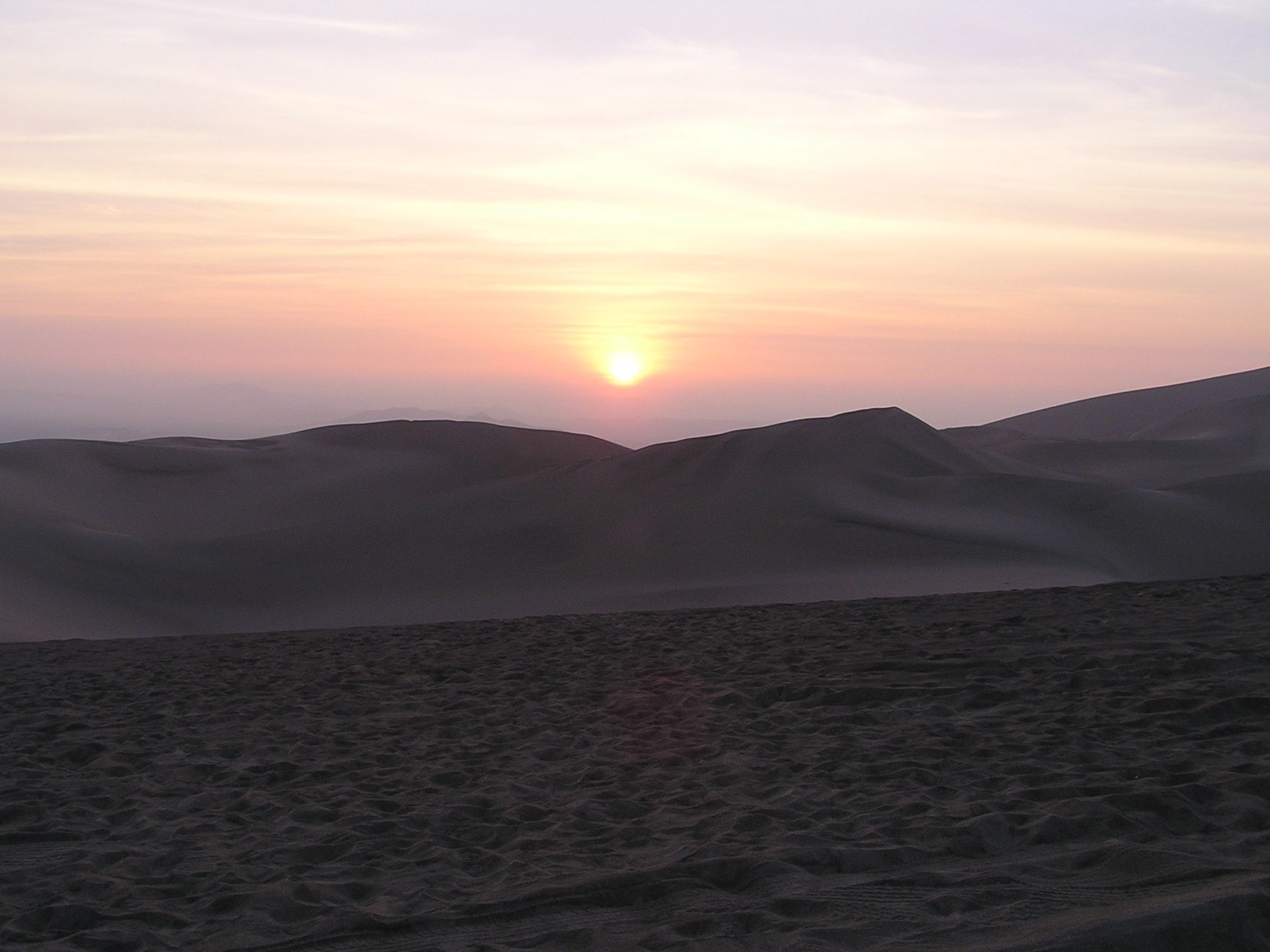
Good group photos at sunset in the Huacachina dunes depend more than anything on being at the top already when the sun starts to drop. After that, it's about placing your group on a crest with sky behind them and deciding before you shoot whether you want faces or silhouettes: with the sun in front of you, you can't have both. Everything else is keeping your phone safe from sand and stopping where the guide says. Photos happen with the vehicle stopped. Never while driving, never standing up in a moving UTV.
We've watched a lot of groups ride back to the oasis with a hundred blown-out shots and not one good one. Usually for the same reasons, and nearly all of them are fixable.
When and where to take the best sunset photos in Huacachina
The light you want is low sun toward the end of the afternoon. It's redder and softer than midday light, with less contrast, so shadows are less harsh and the sky is less likely to blow out; the Wikipedia article on low-sun light in photography explains why. On the dunes the effect doubles, because the sand turns orange and every ripple casts its own shadow.
The catch is that it doesn't last. Near the equator the sun sets more steeply, and that light disappears sooner than someone from Europe or North America expects (the same Wikipedia article covers this). That's why we push so hard on arriving early: a group that turns up late doesn't lose the drive, it loses exactly this part. More on that in Huacachina UTV tour at sunset: what to expect.
Where? The guide decides, and not on a whim. A good photo stop has to meet two conditions at once: a clear view and zero traffic. No stopping in the middle of a route other vehicles use, at the foot of a slope someone might come down, or on the lip of a dune face that's crumbling. The guide knows the wide, firm crests where you can step out of the UTV, walk a few steps and get a clean horizon. Trust them even if you spot a taller dune in the distance that looks better.
Backlight and silhouettes: shooting your group with the sun behind them
Here's mistake number one. Everyone wants the sun in the shot, so they stand with their backs to it, someone fires off a phone photo, and the result is four black blobs against a white sky. Or the reverse: faces fine, sky with no colour.
Decide first which photo you want.
For silhouettes, use the backlight. Put the group on the crest, outlined against the sky, and have the photographer crouch low so there's no sand behind anyone's head, just sky. Tap the screen on the brightest part of the sky so the phone exposes for that; the people go black and the sky keeps all its colour. It works best if everyone spreads out a little and makes a clear shape: arms up, mid-jump, pointing at the sun. A silhouette of people huddled together is just a smudge.
For faces, turn the scene around. Put the sun to one side or behind the photographer, with the group facing it and warm light on their faces. You lose the sun disc, you gain expressions. If you insist on keeping the sun behind them, switch on the phone flash or HDR mode and move in close; flash doesn't reach from far away.
A warning that sounds obvious and is not: don't stare at the sun, including through your screen at full zoom. The NHS warns that looking directly at the sun can cause permanent eye damage, and that sunlight reflected off sand is a hazard too. Keep your sunglasses on until the moment you shoot.
Two tricks we pass on to every group:
- Stagger the heights. On a dune it's easy: a few people standing slightly higher, others sitting on the slope. Far better than a straight line.
- Jump shots on the flat part of the crest. Never on the edge of a steep face. Sand is soft, but an ankle that lands crooked on a slope still rolls.
How to protect your phone from sand in the dunes
Huacachina sand is extremely fine and gets into everything. The classic scene: someone gets back to the hotel, plugs in the charger and nothing happens, because the port is packed with sand. Or the lens comes back scratched because they wiped it on their T-shirt.
What works:
- A zip-lock bag for your phone while riding in the UTV. Take it out only when you're stopped and out of the vehicle.
- A wrist strap or lanyard case, so it doesn't slip out of your hand on the dune.
- Do not swap lenses or open up a camera in the wind. Afternoon winds on the Ica coast lift sand and dust, and sometimes cut visibility sharply; when that happens the trip is rescheduled, but even a normal breeze gets sand into anything left open.
- Do not blow into the port or dig at it with a key. Turn the phone face down and tap it gently. Back at the hotel, use a dry soft brush.
- Clean the lens with a microfibre cloth, never with sandy clothes.
More ideas for your daypack in what to pack for the Ica desert.
The safety rule: no photos while the vehicle is moving
This part is non-negotiable, and we say it plainly in the briefing.
The driver doesn't film. Not with the phone in hand, not clipped to the wheel, not "just for a second on the straight". On sand the terrain changes from one metre to the next, and a drop doesn't announce itself. Whoever is driving watches the route and the guide, nothing else.
Passengers don't stand up or loosen their harness. It's a familiar temptation: the friend who wants a video of the descent from up high and slips the shoulder straps. The 4-point harness and the factory ROPS roll cage protect you because you're seated and strapped in. Standing up, neither of them can do its job.
On descents, phones stay put away. A phone flying around the cabin hits someone. And you won't find it again in the sand.
The guide decides on photo stops. If you want a shot somewhere specific, say so over the radio or at the next stop. They will judge whether you can pull over there without getting in anyone's way.
Ask any operator the same, UTV or classic sand buggy. Plenty of buggy drivers have years on the dunes and do this well; the difference is whether there's proper restraint and who decides when to stop. Our full protocol is on the safety page.
If you're planning a group afternoon with UTV, sandboarding and sunset, photos fit best in the final stretch; we explain the order in UTV, sandboarding and sunset: the full group plan. The vehicle and what comes with it are on the UTV tour page.
Message us on WhatsApp at +51 967 564 701 with your date, how many of you there are, whether you want a late-afternoon departure, and any particular shot you're hoping for. We take it into account when planning the route.
Frequently asked questions
What is the best time for photos in the Huacachina dunes? Toward the end of the afternoon, with the sun low, when the light is warmer and softer and the sand gets its shape back. Be at the top before it starts to drop, because that light doesn't last.
Can I film while driving the UTV? No. The driver never films, and passengers don't loosen their harness or stand up to shoot either. Photos and video happen with the vehicle stopped, wherever the guide indicates.
How do I stop sand from damaging my phone in Huacachina? Keep it in a zip-lock bag while riding and take it out only when stopped. If sand gets into the port, don't blow or poke at it; tap it face down and clean it later with a dry brush.