Tips
Huacachina UTV tour at sunset: what to expect
A sunset UTV tour in Huacachina: how the light, sand and afternoon wind change, why arriving late costs you, and how the ride back is planned for daylight.
Published on 7 October 2026 · 8 min read
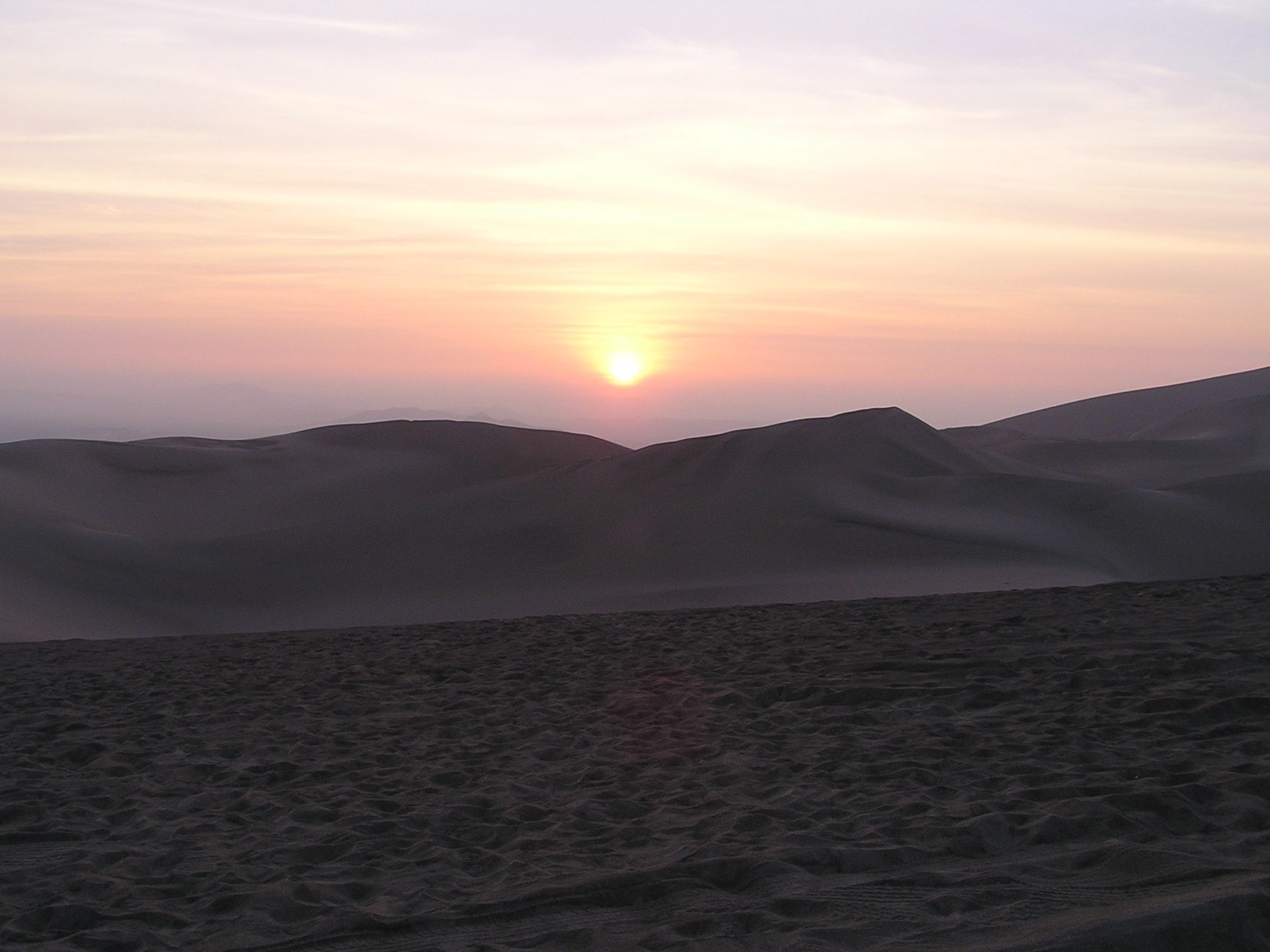
A sunset UTV tour in Huacachina means heading into the dunes toward the end of the afternoon, when the sun has eased off, the sand is starting to cool and the light turns orange. You drive, with a guide in front, and the plan is to reach a high dune, watch the sun drop, and get back to the oasis while there's still light. It's one of the departures we're asked for most, and also the one most often spoiled by a single thing: arriving late.
If you're about to book, here's what actually changes compared with a morning run, what nobody warns you about, and what we do so that fading light never turns into a safety problem.
Is a sunset dune buggy tour in Huacachina worth it?
For most people, yes. Just not for the reason on the postcard.
It's worth it because the afternoon is kinder to your body. Late morning and midday sun in the Ica desert is strong, the air stings your face and the sand bounces light back up at you. The NHS sun safety advice is to seek shade when the sun is strongest around the middle of the day, use SPF 30 or higher, and watch out for sunlight reflected off sand. Toward the end of the afternoon that pressure drops a lot. You drive with your eyes less squinted, you sweat less inside the helmet, and you still have energy left for the last dune.
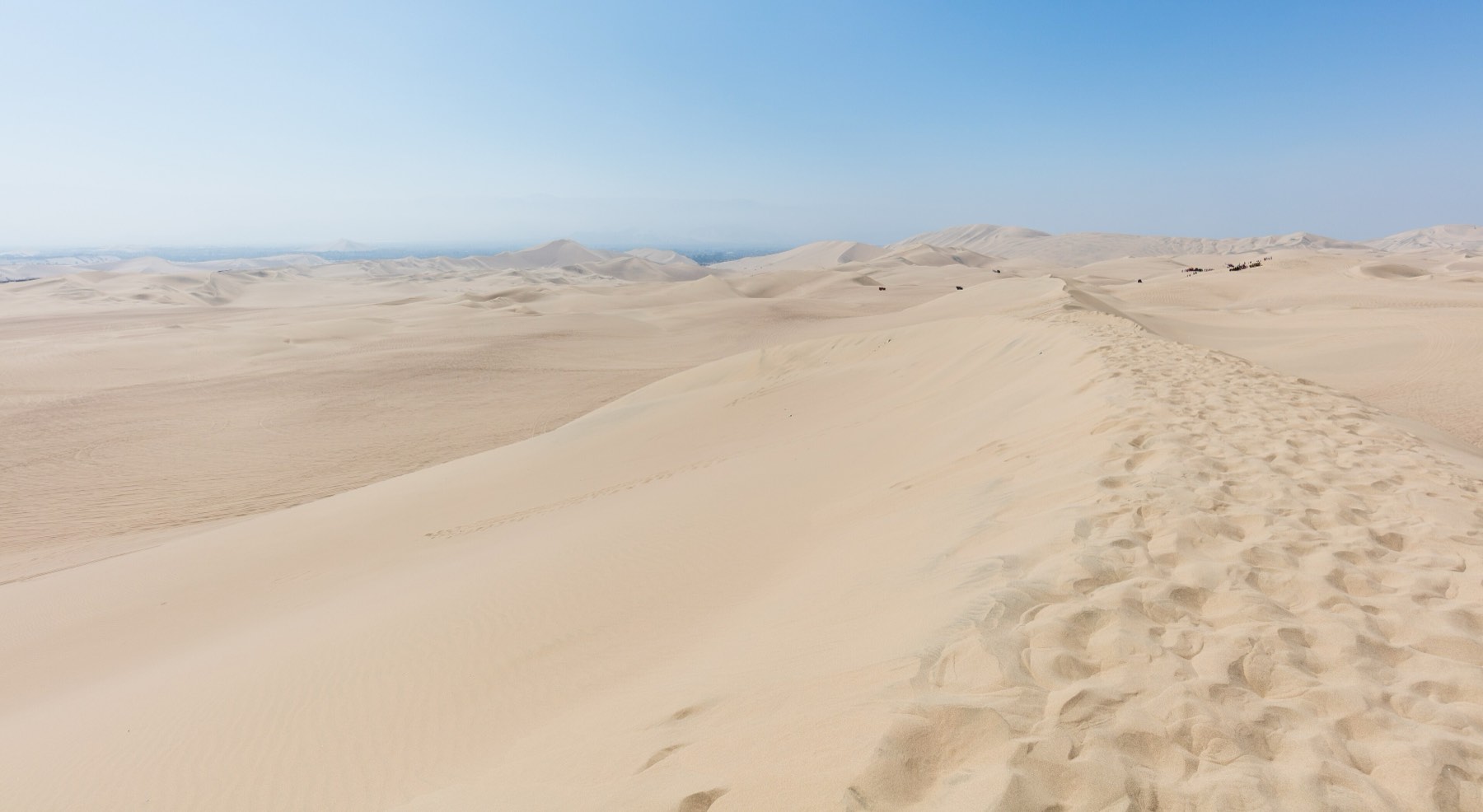
The landscape changes too. With the sun low, every crest throws a long shadow, and dunes that look flat and white at noon get their shape back. That matters more for driving than for photos: it helps the driver read the terrain, because you can see where the sand rises and where it drops away.
When would we steer you elsewhere? If someone in your group gets carsick easily and is also arriving on an empty stomach after a long bus ride, or if what you really want is lots of unhurried driving. The afternoon has a fixed ending, the sun doesn't wait, and that sets the pace. If you want to drive without watching the sky, a morning departure suits you better. We cover the food side of this in what to eat before a dune tour.
What changes with the sand, the wind and the light late in the day
Sand temperature
Sand stores the day's heat. When you set off it's still warm and loose, especially on the faces that were turned to the sun. As the afternoon fades it cools quickly, and once the sun is gone the desert loses heat far faster than visitors expect. We've watched plenty of people climb in wearing a T-shirt and shorts, perfectly happy, and ride back to the oasis hugging themselves.
Pack a light jacket or fleece. You won't want it at the start. You'll want it at the end.
The afternoon wind
On the Ica coast, afternoons often bring wind. The local Paracas winds lift sand and dust, and when they blow hard they can cut visibility sharply across Ica, Pisco and Nasca, as Peru's state news agency Andina reported during a 2025 episode that kicked off after midday.
It doesn't happen every day, far from it. But it's why a sunset departure gets confirmed by looking at the sky that same afternoon, not just at the forecast. If the wind is lifting sand or visibility drops, we reschedule. No debate, even if your bus back to Lima is already booked. We'd rather move your trip than drive a UTV into a cloud of sand.
The light
Late sun is your friend while it's behind you or off to the side. Head-on is a different story: on some climbs you'll be driving straight into it, and the glare off the sand can dazzle you. Sunglasses that grip properly, so they don't fly off on the first descent, help more than any advice.
Why arriving late costs you the sunset
It happens more than you'd think.
A group turns up late to the meeting point. Nothing dramatic: traffic out of Ica, a lunch that ran long, someone who couldn't find their sunglasses. But there are things we never cut before starting: the vehicle check, the safety briefing, the walk-through of the controls, a practice run on flat ground until you feel comfortable, and helmet, harness and footwear checked person by person. All of that happens before the first metre of dune, every time.
So the delay doesn't come out of the briefing. It comes out of the end. And the end is the sunset.
Near the equator twilight is shorter than in Europe or North America, because the sun drops almost straight down toward the horizon; the Wikipedia article on twilight explains why. On the dune that means the good light doesn't linger, and darkness arrives sooner than travellers from northern countries expect.
Our practical advice: arrive with time to spare, having eaten something light, sunscreen already on, closed shoes on your feet rather than in your hand. Whoever shows up in flip-flops spends the start hunting for something else to wear. For the rest of your bag, see what to pack for the Ica desert.
Is Huacachina safe at dusk? Planning the ride back in daylight
The rule for a sunset run is simple: the ride back is planned so you return with enough light to read the terrain, and the guide calls the moment, not the last person still lining up a photo.
In low light the sand loses contrast. A crest that looks obvious in mid-afternoon looks like a smooth surface at dusk, and that's where a new driver gets a scare: they can't see the drop on the other side. That's why the return is timed with a margin, and why the guide calls it even if the sky is still pink and someone begs for just one more photo.
The rest is our usual routine, which simply matters more in the evening:
- Guide in front marking the route, radios between vehicles. If someone hangs back to look, the guide knows immediately.
- A known route home. We don't explore new dunes at dusk.
- 4-point harness snug and helmet on for the final descent too, which is exactly when people relax and want to loosen up to film.
- First-aid kit, water and GPS in the lead vehicle.
- If someone feels unwell, we stop. The friend who says "I'm fine" on the second dune and then goes pale is real, and in the evening chill it shows sooner.
One question worth asking any operator, UTV or classic sand buggy: how late in the afternoon does the return start, and who decides? If the answer is "whenever the group wants," be wary. Plenty of buggies are well looked after and their drivers know the sand by heart, but that question applies to everyone. What is different with us is that you drive, inside a factory ROPS roll cage with bucket seats and side nets, and the pace is set for the least experienced driver in the group. The full protocol is on our safety page.
If you want to add sandboarding or turn the sunset into a full group outing, we put that together on request; see UTV, sandboarding and sunset: the full group plan. And if photos are your priority, read group photos at sunset in the dunes first.
To book, message us on WhatsApp at +51 967 564 701 with your date, how many of you there are, whether anyone would rather not drive, and which hotel you're staying at. We'll confirm the afternoon departure and tell you when to be ready. Vehicle details are on the UTV tour page.
Frequently asked questions
Does it get cold in Huacachina at sunset? It's comfortable while you're driving, but once the sun sets the temperature falls quickly. Bring a light jacket or fleece even if it seems excessive when you leave the hotel.
What happens if it's windy on the afternoon of my tour? If the wind is lifting sand or visibility drops, we reschedule. We let you know on WhatsApp and find another afternoon or a morning that works for you.
Can you do a night dune buggy tour in Huacachina? In low light the sand loses contrast and crests are hard to read, so we plan the ride back to the oasis before dark, and the guide decides when. If you have something different in mind, message us and we'll talk it through.