Ica guide
Ica beyond the dunes: pisco, vineyards and desert
Most people come to Ica for Huacachina and leave without seeing the rest. These are the things worth your time within two hours of the oasis.
Published on 12 June 2026 · 3 min read
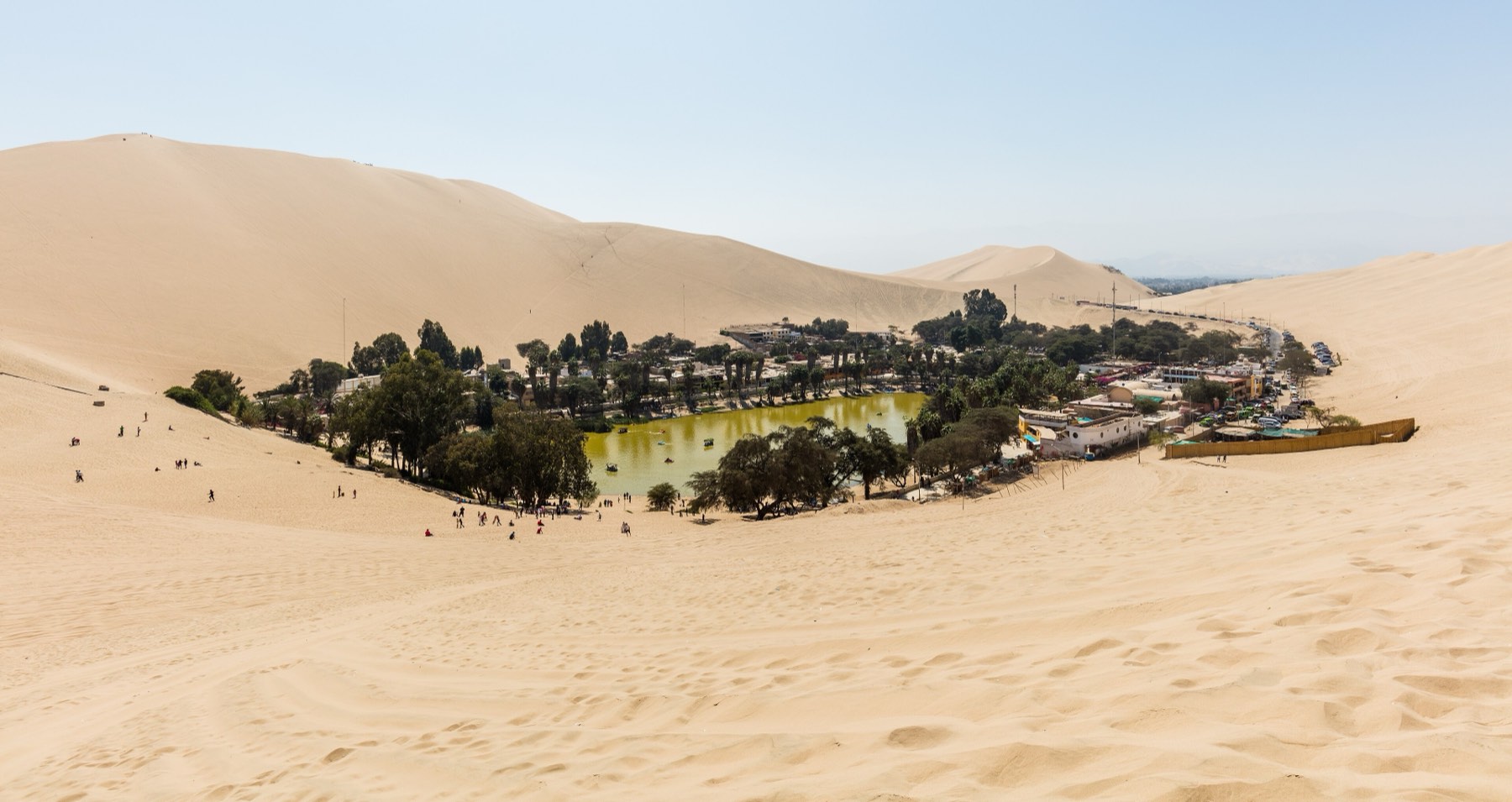
Ica is usually treated as a stopover: one night, some dunes, then on to Nazca or Paracas. That is a shame, because the region has considerably more to offer and nearly all of it is close by.
Pisco: you are at the source
The Ica region is the home of Peruvian pisco, and visiting a vineyard is the easiest thing to add to your day. There are large historic bodegas and small family producers where the owner shows you around personally.
A typical visit covers the clay vessels, the distillation, and ends with a tasting. If you have never tried pisco, ask them to explain the difference between a quebranta, an italia and an acholado: they are different worlds.
One practical note: if you are going to taste, go in the morning or after the dunes — never before.
The city of Ica
Central Ica is not touristy, and that is exactly why it is worth it. The Plaza de Armas, the market and the set-menu restaurants are the most real part of the trip.
The Museo Regional de Ica is small but surprisingly good: it holds pieces from the Paracas and Nazca cultures, including textiles and trepanned skulls. Half an hour well spent.
And while you are there: tejas and chocotejas are the city's traditional sweet. They are sold everywhere.
The Nazca Lines
About two and a half hours south. The way to see them is by light aircraft from the Nazca aerodrome; there is also a viewing tower beside the highway from which a few figures are visible — far more modest, but free.
An honest warning: the flight is short and full of tight turns so that everyone sees from both sides. If you get motion sick, eat lightly beforehand.
Paracas and the Ballestas Islands
North, a little over an hour away. The Paracas reserve is desert meeting the Pacific, with cliffs and red-sand beaches. The Ballestas Islands are visited by boat early in the morning and are full of sea lions, Humboldt penguins and seabirds.
It is the perfect complement to Ica: the same desert, but against the ocean.
A two-day itinerary that works
Day 1
- Arrive in Huacachina and walk around the oasis.
- A relaxed lunch.
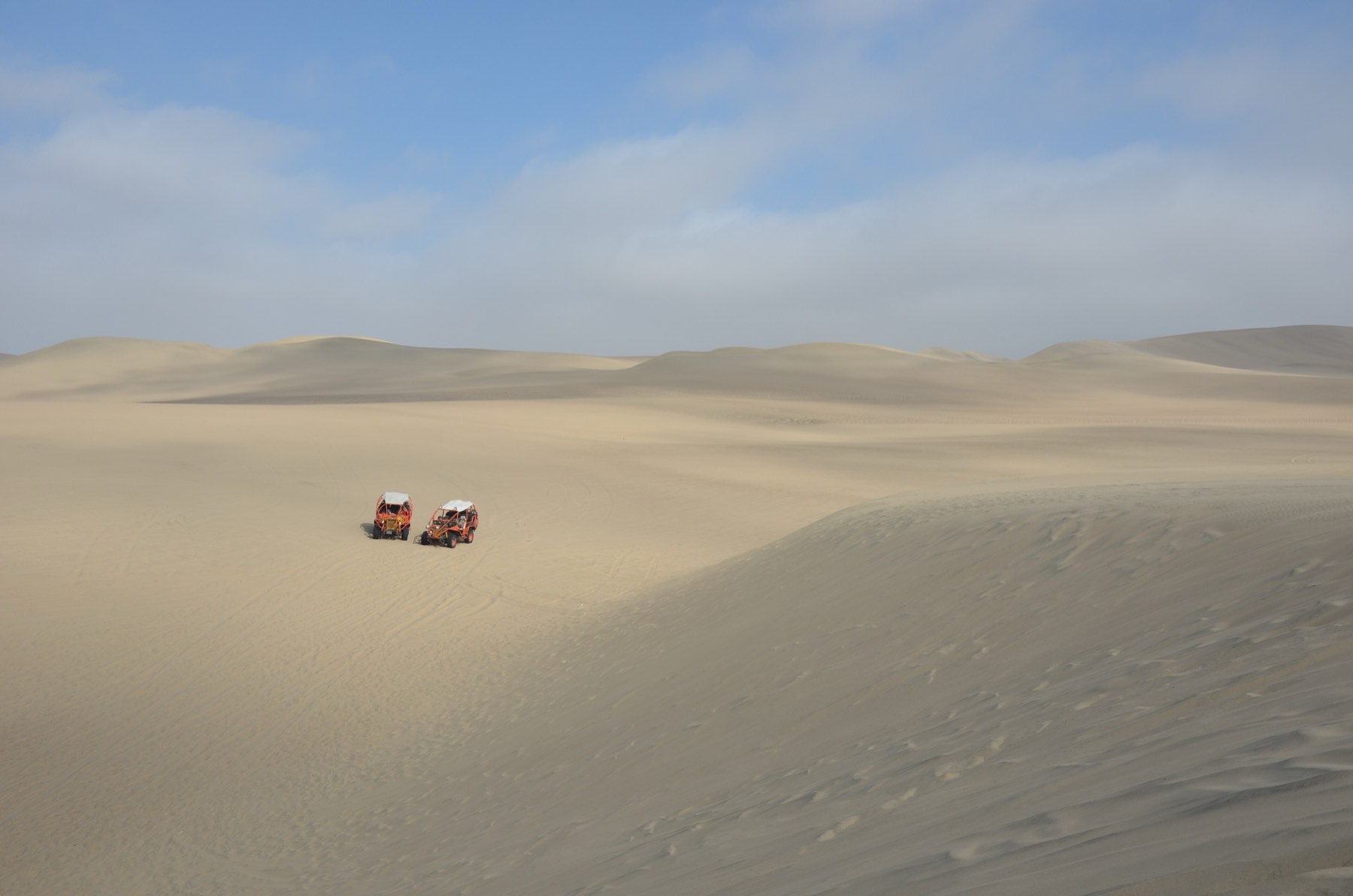
- Mid-afternoon: UTV or buggy trip through the dunes, finishing with sunset.
- Night at the oasis.
Day 2
- Early morning: climb the big dune or sandboard while the sand is still cool.
- Mid-morning: a pisco vineyard.
- Lunch in Ica city and the Museo Regional.
- Afternoon: on to Paracas or Nazca, depending on where you are heading.
When to come
Ica is desert and can be visited all year. December to March is the hottest, with the clearest skies; June to August brings cold nights and the grey coastal sky that often lingers until mid-morning, although out in the desert the sun usually appears anyway.
The dunes are always there. What changes is the wind, and that is decided on the day.
Getting around
Within Huacachina, on foot. Between Huacachina and Ica, taxi or mototaxi, ten minutes. For vineyards and the surroundings, a taxi by the hour or an organised tour. For Nazca and Paracas, the bus.
If you are short on time and want to combine the dunes with one of these, message us and we will help you order the day — even if the other activity is not with us.