Groups
Huacachina school trip: what parents should demand
Huacachina school trip with a dune tour? The checklist parents and teachers should send the operator: helmets, 4-point harness, who drives, zero alcohol.
Published on 7 October 2026 · 8 min read
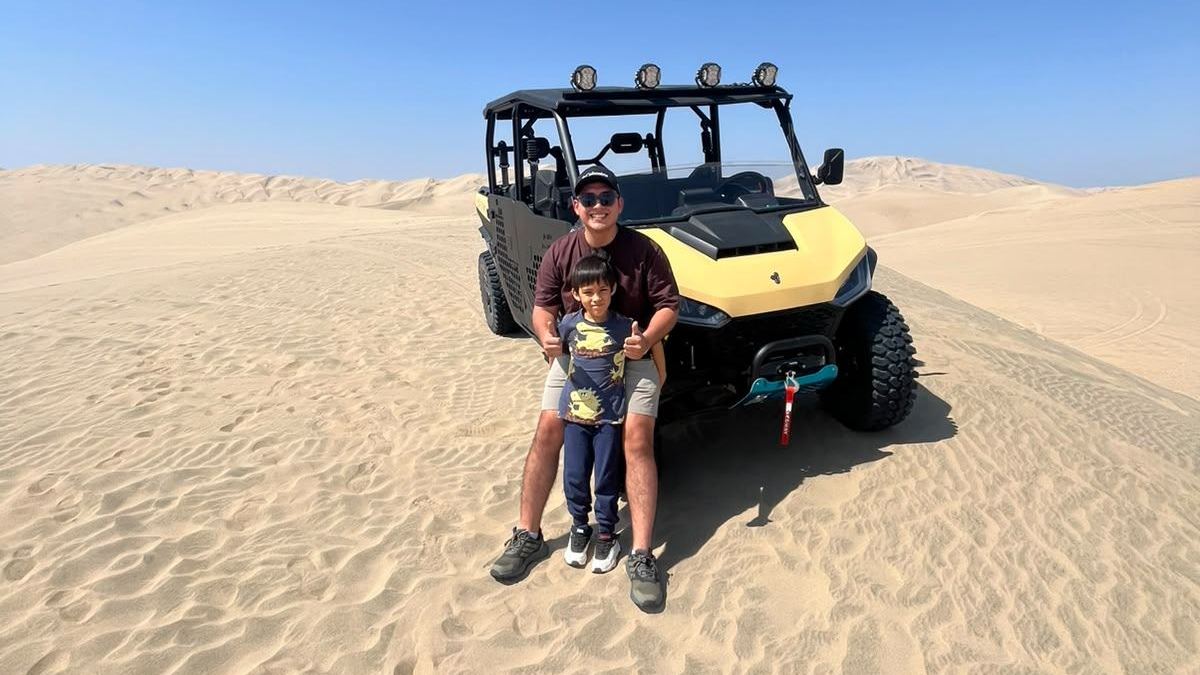
If your child's school trip to Huacachina includes the dunes, here's what to demand from the tour operator before you sign anything: a helmet for every student, a 4-point harness rather than a lap belt, a clear answer on who drives each vehicle, radios between vehicles, a first-aid kit in the lead vehicle, a promise to reschedule if the wind picks up, and a straight answer on what happens if a kid gets sick or hurt. All of that before you sign the permission slip, not after. If any answer comes back vague, or as "don't worry, nothing ever happens here", look elsewhere.
In Peru, the end-of-school "viaje de promoción" is a rite of passage, and Huacachina is one of the classic stops. If you're a teacher bringing a group from abroad, the same list applies. Every season we see the same thing: a coach pulls into the oasis at midday, forty teenagers pile out, a teacher counts heads with a clipboard, and nobody has yet asked what vehicle is taking them into the sand. We've been running trips in the Ica desert for more than 12 years. This is what we'd ask if it were our own kid.
What to demand from a Huacachina dune tour operator on a school trip
Copy this list, send it to the school or the travel agency, and ask for an answer to each point.
- A helmet for every student, driver and passengers alike. Not just whoever sits in front. The World Health Organization notes that wearing a helmet correctly cuts the risk of death in a motorcycle crash by more than six times. Same principle on sand. And a helmet that wobbles on a fifteen-year-old's head isn't doing its job.
- A 4-point harness, not a 2-point belt. The harness holds shoulders and hips. On a descent your body moves sideways and up, and a lap belt leaves the torso loose at exactly the wrong moment.
- Who drives each vehicle. The question most parents forget. More on it below.
- Radios between vehicles and a guide in front marking the route. Someone needs to be able to say "stop" and have every driver hear it.
- First-aid kit, water and GPS in the lead vehicle. Ask where the kit lives. "Back at the office" is the wrong answer.
- What happens if it gets windy. The right answer is: the trip gets rescheduled, no argument. Peru's weather service, SENAMHI, issues warnings for stronger winds along the central and southern coast, and when wind lifts the sand, visibility goes and a marked route stops meaning much.
- What happens if something goes wrong. Someone feels sick or takes a knock: who stops the convoy, who looks after them, who gets called. A serious operator answers that without stopping to think. If they hesitate, that's your answer.
Helmets for everyone, 4-point harnesses, a guide in front with a radio, first-aid kit, water and GPS in the lead vehicle, and rescheduling when it's windy: that's what we do before every departure (it's all on our safety page). But the list works for any operator, not just us. For the other side of the coin, read our warning signs that a dune tour isn't safe.
To be fair to the classic sand buggies: plenty are well looked after, and many drivers know every dune. But the typical buggy is hand-built in a workshop, with bench seats, a 2-point belt or none, and usually no helmets. The difference with a factory UTV comes down to where the safety was engineered: in a local workshop, or on the manufacturer's line with a tested rollover cage.
Who drives if the students are minors?
On our UTV tours the customer drives, with a guide leading. With a school group, that needs thinking through before you arrive.
Minimum ages for driving and for riding as a passenger depend on the vehicle, and we don't give a blanket number online. Message us with the exact ages in the group and we'll tell you what's possible. A common way to set it up: adults in the group who meet the requirements (teachers, chaperones, parents who came along) take the wheel, and students ride as passengers in helmet and harness. If some students are already of age, we can work with that.
We ask schools to decide two things before arrival, not on the sand. First, how many adults can and want to drive, because that sets how many vehicles go out. Second, which students would rather not ride. There are always one or two. That's fine. They can stay with an adult or, if they meet the minimum age and height, try zorbing in the mid-afternoon, which involves no driving at all.
Permission slips and the sheet every teacher should carry
The travel paperwork is the school's job and we won't give legal advice. Our part is the activity.
The permission form parents sign should name it: "UTV dune tour in Huacachina", not a generic "recreational activities". If your child will also do zorbing or sandboarding (sandboarding isn't included by default, it's arranged on request), that should be on there too.
The teacher in charge should carry, on their phone and on paper in case the battery dies, a sheet for each student with emergency contacts, allergies and medication, any back, neck or asthma issues, and if they get carsick.
That last one matters more than people think. The kid who gets sick on the coach will get sick on the dunes, and it's far better to seat them up front and keep the pace gentle from the start than to find out once the helmet is on. Nobody else in the group needs to know.
If a student has a medical condition, they should check with their doctor before the trip, and the school should tell us beforehand. Then we can tell you what's possible, and that conversation is a lot easier over WhatsApp a week out than on the sand with the coach idling.
Zero alcohol, passengers included
On a graduation trip, someone always has a bottle in their backpack. Everyone knows it, even if nobody says so at the parents' meeting.
Our rule is simple: anyone who has been drinking doesn't get in the vehicle. Not at the wheel, not as a passenger. The WHO points out that on the road, crash risk starts at low blood alcohol levels, and on sand, with slopes and turns, the margin is smaller still. A passenger who's had a few is a problem too: they get dizzy, throw up inside the helmet, loosen the harness to lean out.
Ask the school to announce it the night before as a trip rule, not a suggestion. Anyone who turns up smelling of drink stays behind.
How to run the group on the day
Be on time. The group that drags its feet at breakfast loses the best light and hits the sand when the sun is at its harshest. SENAMHI publishes a UV forecast by region, Ica included, and the sand reflects the rest back at you. Sunscreen, sunglasses and water for everyone.
Closed shoes. Every year someone shows up in flip-flops, and you can't brake properly or walk on hot sand in those.
Phones on a lanyard or in a zip-lock bag. Ica sand is fine enough to get into the charging port, and more than one phone has come back from a tour charging only when it feels like it.
One adult per vehicle who counts heads getting in and out, even if they're not driving.
And a note for teachers: the student who says "I'm fine, sir" while going pale on the second dune isn't fine. Our guide will spot it, but it helps if you're watching too.
For bigger groups, see how a UTV convoy for large groups works.
To get a quote, message us on WhatsApp at +51 967 564 701 with: trip date, number of students and adults, students' ages, how many adults can drive, where you're staying, any medical conditions, and if you want to add zorbing or sandboarding. We'll get back to you with how we'd set it up.
Frequently asked questions
Can students under 18 drive the UTV? It depends on their age and the vehicle, and we don't give a general figure without knowing the group. Send us the ages and we'll tell you who can drive and who rides along.
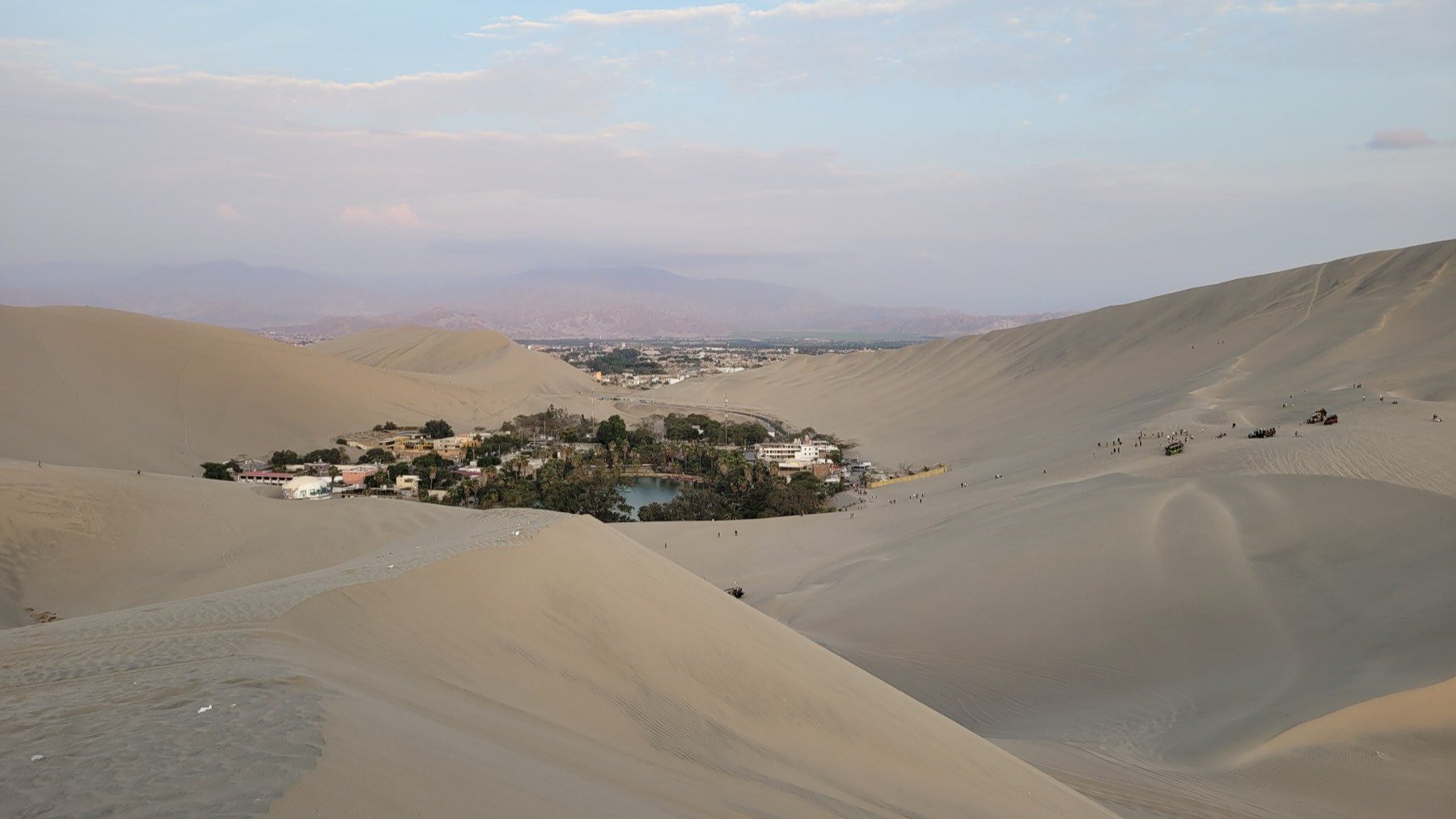
Is Huacachina safe for a school trip? The oasis is a well-established tourist spot a few kilometres from the city of Ica. How safe the dune tour is depends on the operator: helmets for all, 4-point harnesses, a guide in front, radios and a willingness to reschedule for wind are the minimum.
What happens if it's windy on the day? The tour is rescheduled. With a coach and a fixed itinerary that's awkward, so build some slack into the programme to move the outing if needed.