Tips
Motion sickness on a dune tour: how to avoid it
Get motion sick on a dune tour? What to eat first, why driving helps, which seat to pick and what to know about pills before your Huacachina UTV ride.
Published on 7 October 2026 · 8 min read
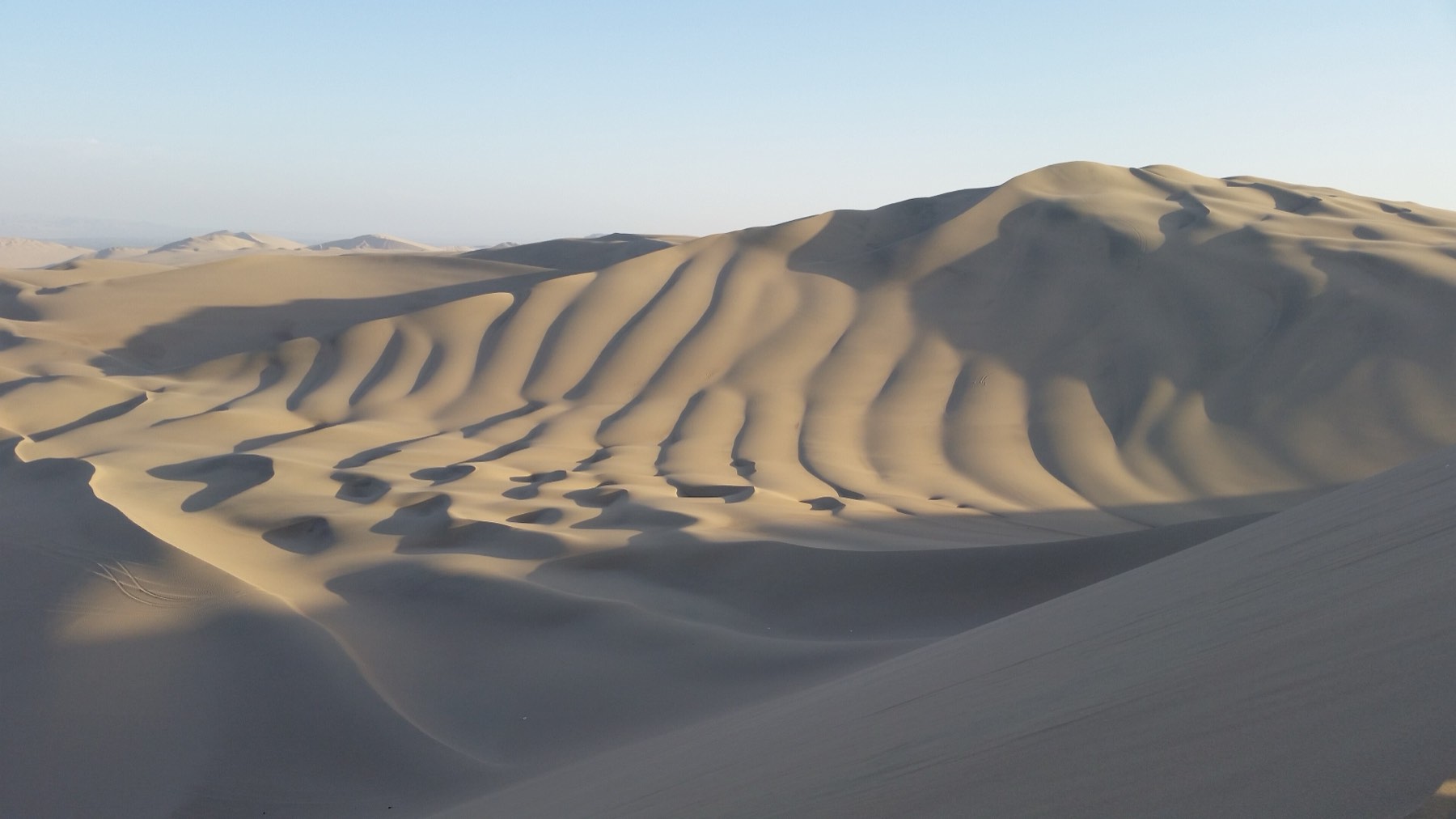
If you get motion sick, you can still do a dune tour in Huacachina without a miserable time, but it takes a bit of planning. What helps most is driving the UTV yourself instead of riding as a passenger, eating something light beforehand (nothing heavy, no alcohol), staying hydrated, looking at the horizon rather than your phone, and telling the guide so the pace is gentle and there are stops. If you plan to take anything for motion sickness, check with a doctor or pharmacist first, especially if you intend to drive.
We see it almost every week. The friend who says "I'm fine, I'm fine" on the first dune goes quiet on the second, and by the third is pale, eyes shut, gripping the harness. It's nearly always someone riding in the back, filming on their phone. And it could nearly always have been avoided.
We've been running trips in the Ica desert for more than 12 years. This is what we've seen work.
Why do dune buggy tours cause motion sickness?
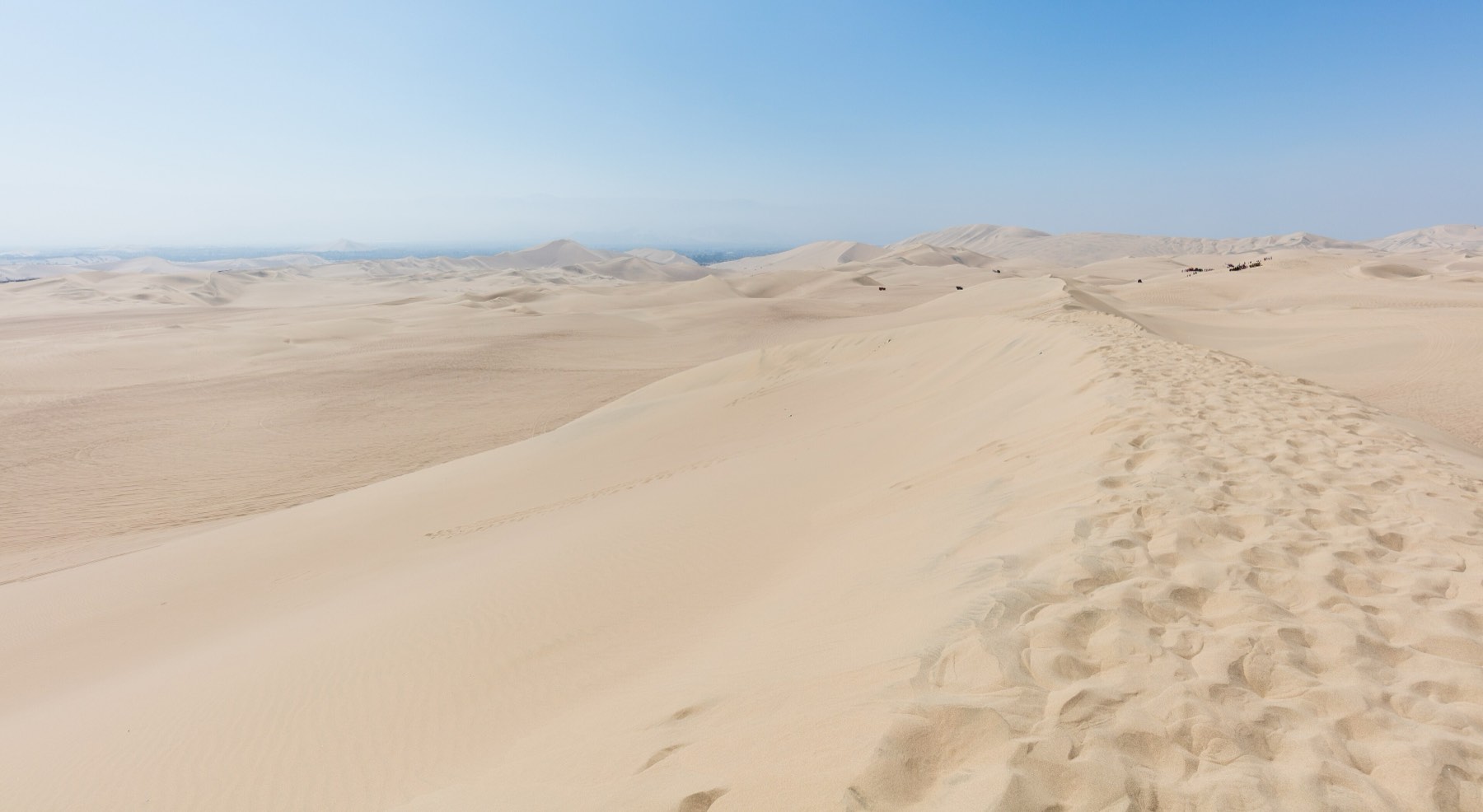
Motion sickness kicks in when what your eyes see doesn't match what your inner ear feels. On a dune the vehicle climbs, drops and tilts from side to side. If you're staring at your phone at that moment, your eyes say "nothing is moving" while your inner ear says "we're falling". Your brain can't decide who to believe and answers with nausea.
Some people are more prone to it. The CDC's guidance for travellers notes that susceptibility is higher in school-age children, somewhat higher in women, and in people with a history of migraine or vertigo. If the bus ride down the Pan-American Highway from Lima left you queasy, take that as a warning. This is general information, and if you get very sick it's worth mentioning to your doctor before the trip.
One thing in your favour: our UTVs have long-travel suspension, bucket seats and a 4-point harness. Your body isn't bouncing around or sliding along a bench, and that cuts down on the jolting. It doesn't remove the climbs and drops, which are the point of the ride, but it helps. The difference with a classic sand buggy is in UTV or sand buggy.
Before the tour: what to eat, what to drink, what to skip
This is where half the battle is won. It's also where people get it most wrong.
Food. Not on an empty stomach, and not straight after a huge ceviche lunch either. The NHS advises avoiding heavy meals and spicy food shortly before and during travel. What we see working: something light and dry before you head out, like bread, crackers or fruit, and saving the big meal for afterwards. More detail in what to eat before a dune tour.
Alcohol: none before the tour. And watch the night before: the pisco from the winery tasting or the party at the oasis gets paid back on the first dune. The NHS lists alcohol among the things to avoid too.
Water. You sweat in the desert without noticing, and dehydration makes nausea worse. Drink before you set off, in sips, without flooding your stomach. Bring your own bottle; the lead vehicle carries water and a first-aid kit, but it's better if everyone has their own.
People underestimate sleep. Arriving on the overnight bus without a wink of sleep is the perfect recipe for feeling sick. If you can, do the tour the day after you arrive, or at least rest first.
Ginger. The NHS mentions it as something that helps some people, as a tablet, biscuit or tea. If you take other medicines or you're pregnant, ask your doctor or pharmacist first. It won't work for everyone, but it's worth a try.
During the ride: drive, pick your seat, watch the horizon
Driving makes you less sick than riding in the back
The most useful tip, and the one fewest people know. The CDC's guidance lists being in control, such as being the driver, among the measures that help against motion sickness. It makes sense: the driver anticipates every turn and drop, so the brain gets ready. We see it on the sand all the time. The driver comes off the dune laughing; the one in the back has gone quiet.
On our UTV tour you drive, with the guide in front marking the route and radios between vehicles. First there's a safety briefing and a practice run on flat ground until you're comfortable with throttle and brake. Never driven anything like it? Doesn't matter, that's what the practice run is for. If you get sick easily, ask for the wheel from the start, not halfway through when you already feel awful.
If you ride as a passenger, choose the seat
Up front, next to the driver. That's exactly what the NHS recommends in a car: sit in the front and look at a fixed point such as the horizon. In the UTV, from the front you see the dune coming and your body braces for it. From the back, you see a headrest.
Look far away, not at your phone
No filming the whole ride with your head down. Look at the next crest, at the horizon line. Take photos and videos at the stops, with the vehicle still. A phone that comes back with sand in the charging port is punishment enough without adding nausea.
Speak up before it's too late
Tell the guide at the briefing that you get motion sick. They'll pick gentler slopes, stop more often, and know you mean it when you ask to stop. During the ride, at the first sign (extra saliva, a hot face, odd yawning), call it on the radio. We stop somewhere safe, you get out, breathe fresh air and look into the distance. The NHS also suggests closing your eyes and breathing slowly. Gritting your teeth in silence until the end, on the other hand, usually ends with someone throwing up beside the vehicle at the last stop.
If speed also makes you nervous, read scared of a UTV tour?: asking for a gentle pace helps with both.
Can I take a motion sickness pill before the tour?
What follows is general information, not medical advice: check with your doctor or pharmacist before taking anything. What we can pass on, because the CDC covers it in its clinical travel guidance:
- Motion sickness medicines work best taken before you start, not once you already feel sick.
- Modern "non-drowsy" antihistamines are not effective for motion sickness, according to the CDC. The ones that do work often cause drowsiness.
- Some aren't suitable for children or for people with certain conditions, and the CDC suggests the doctor consider a trial of the medicine before the trip, not on the day of the tour.
The practical consequence matters: if you take something that makes you drowsy, don't drive the UTV. Ride as a passenger and hand the wheel to someone else. Let the guide know.
When it's better not to ride
If you have active vertigo or a stomach bug, or you got badly sick last time on something similar and have changed nothing, today may not be the day. Same if you feel unwell before we even start. And if the wind lifts sand or visibility drops, we reschedule for everyone; the rest of our procedure is on the safety page.
What to send us on WhatsApp
Message +51 967 564 701 with:
- The date, and whether you're arriving by bus that same day.
- How many of you there are and who gets motion sick.
- Who wants to drive (the queasy ones first).
- Whether anyone plans to take motion sickness medication.
- Your hotel, so we can look at transfers (not included, we can check).
With that we'll plan the ride around the most delicate stomach in the group. The full route is on the UTV tour page.
Frequently asked questions
Do Huacachina dune buggies make you sick? Some people, yes, especially passengers looking at their phones. Driving, sitting up front, eating light and watching the horizon cut the risk a lot.
What should I do if I feel sick in the middle of the tour? Call it on the radio at the first symptom. We stop somewhere safe, you get out for air and water, and then you can take the wheel or we carry on at a gentler pace.
Do kids get more motion sick on the dunes? As general information, the CDC notes that susceptibility is higher in school-age children. If your child gets very carsick, talk to their paediatrician before the trip and don't give them motion sickness medication without medical advice. Tell us when booking and read our guide to a UTV tour with kids.