Tips
Scared of a UTV tour? How to ask for a gentle pace
Nervous about a UTV tour in Huacachina? How to ask for a gentle pace, ride as a passenger, use the practice run and stop whenever you need to.
Published on 7 October 2026 · 8 min read
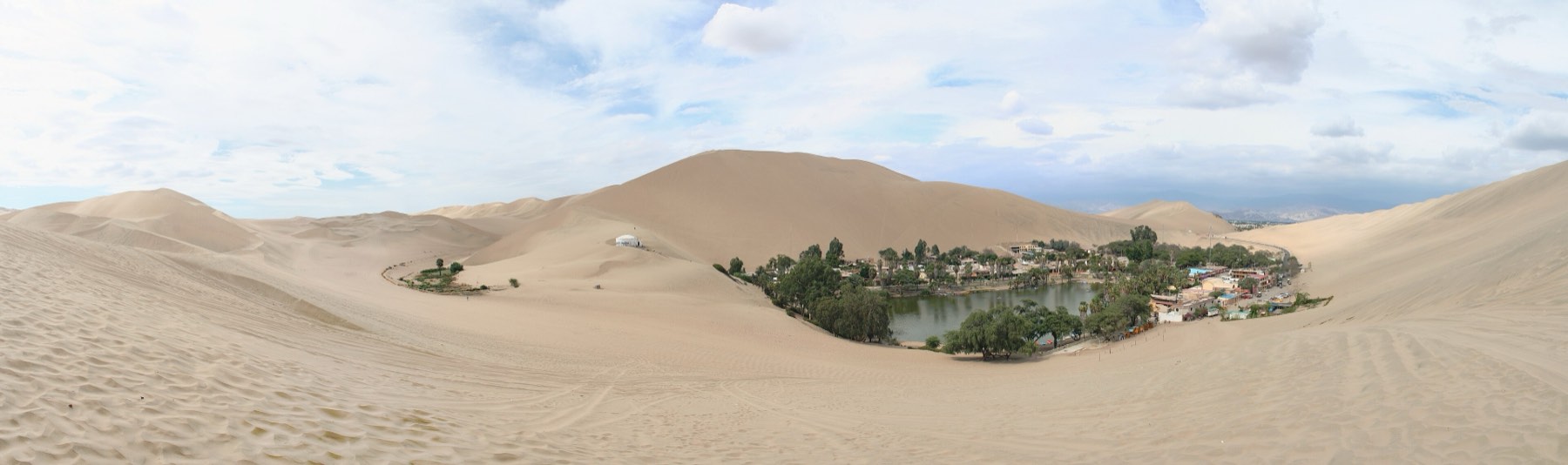
Yes, you can do a UTV tour in Huacachina when you're scared, and far more people do it than you'd think. Most of it comes down to saying so when you book: ask for a gentle pace, decide whether you drive or ride as a passenger, take your time on the flat-ground practice run, and position yourself right behind the guide. During the ride you can ask to stop at any moment over the radio, and nobody will make you go down a dune you don't want to go down.
We've spent more than 12 years on the dunes of Ica, and on almost every trip someone turns up with a knot in their stomach. Sometimes they tell us. Often they don't, and it shows anyway: they barely laugh, ask the same question three times during the briefing, grip the harness with both hands before we've even started. That's fine. The desert isn't a test.
Here's what we tell those people. We've split it by type of fear, because being scared of speed and being scared of heights call for different fixes.
Can you do a Huacachina dune buggy tour if you're afraid of speed?
Yes, and here's something that sounds backwards: many people who are afraid of speed do better driving than riding as a passenger.
The reason is simple. On our UTV tour you drive, with the guide in front marking the route. The person at the wheel decides how hard to accelerate, when to brake and how long to look at a slope before committing to it. Fear usually comes from not being in control, and behind the wheel you're the one in control. We've watched people arrive saying "I'll just watch" and end up asking to drive the last stretch.
Before setting off there's a safety briefing that walks you through the controls, then a practice run on flat ground. It has no fixed length: it lasts until you're comfortable with throttle and brake. If you need more laps on the flat, you get them. What the briefing covers is in driving on sand: what the briefing explains.
If you'd rather not drive, that works too. Ride as a passenger, and in many groups people take turns at the wheel. Just choose your driver well: someone calm, not the friend who spent the whole bus ride from Lima talking about rally racing.
What's holding you in place
It helps to know what's around you. A UTV is a factory-built vehicle with a ROPS rollover cage designed and tested by the manufacturer, a 4-point harness across shoulders and hips, a bucket seat, side nets and helmets for everyone. When the vehicle leans, your body doesn't lean with it: it stays pinned to the seat. For a lot of nervous riders, feeling that on the first turn changes everything.
In a classic sand buggy, with bench seats and a 2-point belt or none, that loose feeling is exactly what sets the fear off. Plenty of buggies are well maintained, but the restraint is different. We explain it in UTV or sand buggy.
Afraid of heights: what the top of a dune feels like
This is a different fear. And there's a trick to it.
What frightens people isn't the height of the dune itself. It's the moment at the crest: the nose of the vehicle tips over the edge and for an instant you can't see the ground ahead, only sky. Your brain reads that as a cliff. Then the UTV tilts, you see the slope, and you realise it's a sand incline, not a drop.
The NHS lists heights among the situations that can trigger a phobia, alongside flying and small spaces, and mentions breathing exercises among its tips. That's general information: if your fear is strong, it's worth talking it through with a health professional. We're not therapists, but here's what we've seen work on the sand:
- Ask the guide to stop at the top before each descent. You see the whole slope before you're on it. Knowing what's coming takes away half the fright.
- Look far, not down. At the horizon, at the next dune. Same as on a ladder.
- Breathe slowly. The NHS describes a simple method: breathe in through your nose and out through your mouth, counting steadily to five. Do it at the crest, with the vehicle stopped.
- Ask for gradual slopes. Some routes have gentler gradients and the guide knows where they are.
And if you don't like the look of a dune, you don't go down it. The guide finds a gentler line for your vehicle.
How to ask for a gentle pace on a UTV tour
Asking for a gentle pace isn't embarrassing. For the guide it's working information, same as knowing someone's never driven before. Our groups are small and we adjust the pace to the group, so you're not asking for anything unusual.
Say it early, and say it again:
- When booking. Write on WhatsApp "someone in our group is nervous, we'd like a gentle pace". Then we arrive with that already planned.
- At the briefing. Tell the guide face to face. They'll ask whether you'd rather drive or ride, and can put you right behind them.
- During the ride. Over the radio. Useful phrases: "slower, please", "can we stop here a moment", "not this slope".
Riding directly behind the guide helps a lot: you follow their exact tracks, see where they enter each descent, and have someone who knows the terrain in front of you.
A word about groups of friends: one person's nerves often clash with another's appetite for speed. With several vehicles, you can sort out who rides with whom, so the nervous one isn't sitting next to the friend who wants to race. The guide always sets the pace. The worst thing we see is someone pale in the passenger seat, keeping quiet so they don't spoil the fun. More on that in a friends' trip to Huacachina.
What happens if you want to stop halfway?
It happens, and it's no big deal. You call it on the radio, we stop in a safe spot, you get out if you like, drink some water, breathe. Then you talk it over with the guide. You can swap seats and go from driver to passenger or the other way round, or carry on through the calmer sections only. We've seen people stop, sit in the sand and climb back behind the wheel laughing at themselves.
Sometimes fear gets tangled with something else: motion sickness. It can be hard to tell where one ends and the other begins. If you get carsick, also read doing the UTV tour when you get motion sick.
One rule of ours helps nervous riders: if the wind lifts sand or visibility drops, we reschedule, no argument. You won't be out on a dune in bad weather. The rest of our procedure is on the safety page.
When it's better not to ride
If you have frequent panic attacks, a heart condition, or a fear so strong that just thinking about it costs you sleep, this may not be your activity, or only after talking to your doctor. Nothing wrong with skipping the dunes this trip.
What to send us on WhatsApp
Message +51 967 564 701 with:
- The date.
- How many of you there are, and whether anyone is afraid of speed or heights.
- Who wants to drive and who would rather ride along.
- Whether anyone gets carsick.
- Your hotel, so we can look at transfers (not included, we can check).
With that we'll shape the trip around the most nervous person in the group. Everything about the route is on the UTV tour page.
Frequently asked questions
Is the Huacachina dune buggy ride scary? It depends on the pace and the vehicle. In a UTV with a 4-point harness and a guide who adjusts the speed, most nervous riders end up enjoying it, especially if they drive or ask for a stop before each descent.
Can I ride as a passenger if I don't want to drive? Yes. You can be a passenger for the whole route or take turns at the wheel with someone in your group.
Can I stop in the middle of the tour? You can ask to stop at any time over the radio. We pull over somewhere safe and work out with you how to continue: switching seats, sticking to gentle sections or finishing calmly.