Safety
UTV tour in Huacachina for seniors: a family guide
A UTV tour in Huacachina for seniors: back and neck, getting in and out, what pace to ask for and when it is better not to ride.
Published on 7 October 2026 · 8 min read
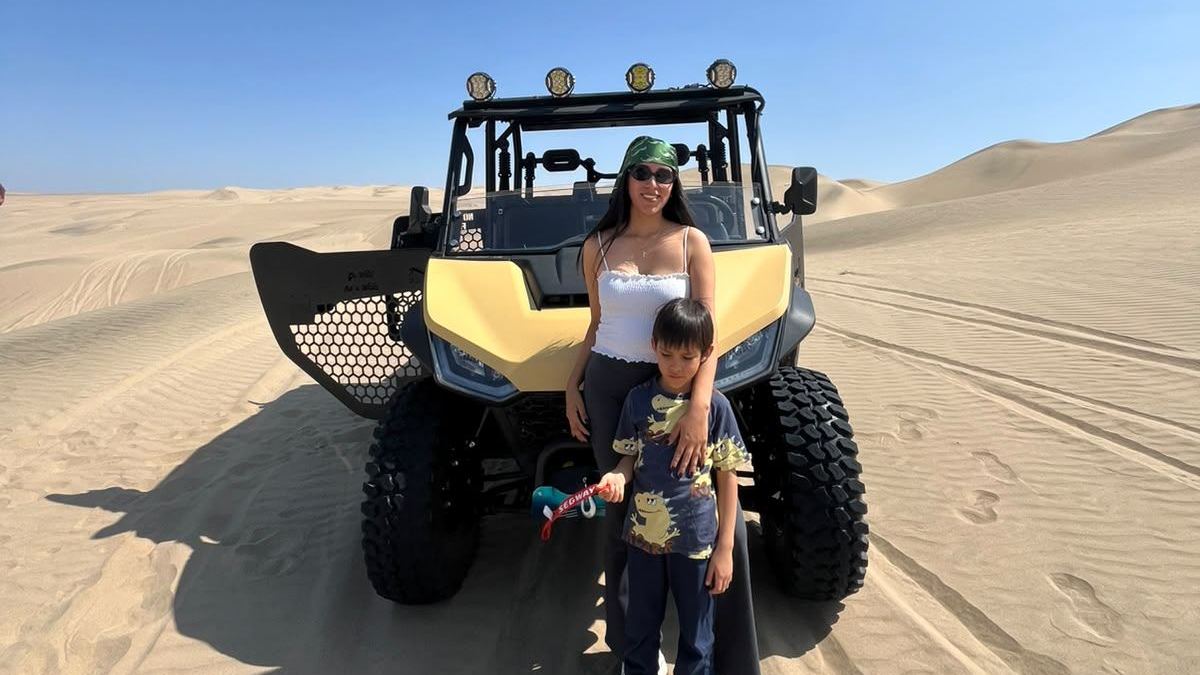
Can older parents or grandparents do a UTV tour in Huacachina? In many cases, yes, and they often enjoy it more than they expected to. What makes it work for seniors is a vehicle that soaks up the bumps (bucket seat, 4-point harness, long-travel suspension) and a gentle pace requested when you book. If they have back, neck or heart problems, or a recent operation, they should have an honest talk with their doctor first. They can drive themselves or ride as passengers.
After more than 12 years in the Ica desert, we can tell you that some of the people laughing loudest on the sand are well into their seventies. We've also had to tell a grandfather, kindly, that he should sit this one out, because he'd had a hip operation nobody mentioned when the family booked. We'd much rather have that conversation on WhatsApp before you travel than on the dunes.
This one's for the son or granddaughter planning the trip who doesn't want anyone limping back to the hotel.
Is a Huacachina dune buggy tour hard on the back and neck?
It depends a lot on the vehicle. Even more on how it's driven.
A factory-built UTV has long-travel suspension: the shocks absorb most of each sand ripple before it reaches the seat. In practice the sand hits the machine, not your spine. Add a bucket seat with side bolsters that hold the body through turns, and a 4-point harness that keeps shoulders and hips against the backrest, and the body doesn't get thrown around.
Compared with a bench seat and a lap belt, a seventy-year-old feels the difference the next morning. We go through it in UTV or sand buggy, and we try to be fair there: many classic buggies are well maintained, but their safety is built in a workshop rather than designed and tested at the factory.
Now the honest part. Even with all of that, going down a dune is a vertical movement. There's a moment where the vehicle drops and your body presses into the seat. At a gentle pace it's very manageable. Flat out, it isn't.
Everyone wears a helmet, drivers and passengers. For someone with a sensitive neck, the helmet adds a little weight to the head on the sways. It's not much, but good to know. If your dad's neck already complains when he turns to reverse the car, tell us before you book.
Getting in and out: what nobody warns you about
For a lot of older travellers this is harder than the dunes themselves. No brochure mentions it.
To get into a UTV you lift your leg over the edge, duck slightly under the roll cage bar and lower yourself into the seat, which sits deep because it's a bucket. Getting out is the same in reverse, on soft sand that gives no firm footing.
The most useful thing is having a family member right beside them to lend a hand getting in and out, no rushing. If you think someone will need more help than that, let us know on WhatsApp and we'll sort it out before the day.
Shoes matter more than people think. Closed trainers with a decent sole: on sand, a sandal slips off and the ankle rolls right at the moment of stepping down from the vehicle. Somebody always turns up in sandals, and always regrets it.
Have them practise climbing in and out at the starting point before setting off. If it's a struggle there, better to find out then than on top of a dune. And if knees are an issue, keep stops outside the vehicle to a minimum. The view's the same from the seat.
If someone uses a walking stick or has a hip or knee replacement, message us first with the details. We don't rule it out straight away, but we want to talk it through.
What pace to ask for, and who drives
This one surprises the kids: plenty of grandparents want to drive. And they drive well.
On our tour the guest drives, with the guide in front marking the route and radios between vehicles. There's a safety briefing and a practice run on flat ground until each driver is comfortable with throttle and brake. Whoever drives sets their own speed, and for an older person that sense of control is reassuring. Driving also tends to cause less motion sickness than riding as a passenger (more on that in what to do if you get motion sick).
If they'd rather be passengers, fine. Just make sure the driver is a calm family member, not the cousin who arrived with something to prove. We see this often: the grandson floors it, grandpa says nothing so as not to spoil the fun, and by evening everything hurts.
Things you can ask for when booking, without feeling awkward:
- A gentle pace for the whole group. If the younger ones want something livelier, ask whether they can go in a separate vehicle.
- Gradual slopes instead of the steepest drops.
- More stops to rest, drink water and take photos.
- Ask which time of day works best, when the sun is less harsh (morning or sunset).
We work with small groups, so adjusting the pace isn't some special favour. It's just how we run things. If anyone wants to stop at any point, they say so on the radio and we pull over somewhere safe. If your mum is a bit nervous about the whole idea, have a look at doing a UTV tour when you're scared.
When is it better for seniors not to ride a UTV?
The section we care about most. Better not to ride, or check with a doctor first, if there is:
- A slipped disc, advanced osteoporosis or back or neck pain that already limits daily life.
- Recent surgery on the spine, hip, knee, shoulder or heart.
- Heart or blood pressure problems that are not under control.
- Frequent dizziness or vertigo.
We're not doctors and we won't decide for anyone. What we do know is that movement on the dunes is nothing like a car on a highway. The CDC's guidance for travellers with chronic illnesses recommends a pre-travel consultation with their usual doctor before booking anything non-refundable, and carrying medication in hand luggage rather than checked bags. For a trip to Ica, that means telling the doctor there will be a ride with bumps and drops.
Some days aren't for anyone: if the wind lifts sand or visibility drops, we reschedule, no argument. Our full procedure is on the safety page.
The NHS lists older adults among the people more at risk of dehydration. If they take diuretics or have been told to watch their fluids, they should check with their doctor. The NHS also warns that sunlight reflected off sand is particularly harmful to skin. Sunscreen, sunglasses, a light long-sleeved top and water close at hand. The lead vehicle carries a first-aid kit, water and GPS, but everyone should have their own bottle. And if someone prefers to skip the dunes, Ica is only about five kilometres from the oasis, and we can put together a quiet day at the pisco wineries on request.
What to send us on WhatsApp
To plan it properly, message +51 967 564 701 with:
- Your preferred date, and whether you're coming down from Lima.
- How many people, and the ages of the older travellers.
- Any back, neck, knee or heart issues, or recent surgery.
- Who wants to drive and who would rather ride along.
- Whether anyone uses a walking stick or needs a hand getting in.
- Your hotel, so we can look at transfers (not included, we check separately).
With that we can suggest a pace, a route and a time of day. If kids are coming too, read UTV tour with kids and big families on the dunes. The full route is on the UTV tour page.
Frequently asked questions
Is there a maximum age for a UTV tour in Huacachina? We don't publish a maximum age: the state of someone's back, neck and heart matters more than the number. Tell us about each person and, if in doubt, have them check with their doctor.
Can a senior drive the UTV? Yes, if they're fit to drive and feel comfortable after the practice run on flat ground. Many prefer driving because it lets them control the speed.
What if my dad wants to stop halfway through? He tells the guide over the radio and we stop somewhere safe to rest or swap drivers. Nobody has to carry on at a pace they don't enjoy.